


All the White Dahlias- Pantone Color of the Year 2026: Cloud Dancer
Well love it or hate it- it’s here- the Pantone Color of the Year for 2026- “Cloud Dancer”. It’s a pretty fancy white color and since I grow a lot of white flowers- I figured why not show you some of my favorite white dahlias. Let’s go!


We’ll start with my two most faithful white dahlias- I can always rely on these two— Blizzard and Ryecroft Jan. If I’m looking for a non rounded shape then I go for Bridezilla and Karma Maarten Zwaan.
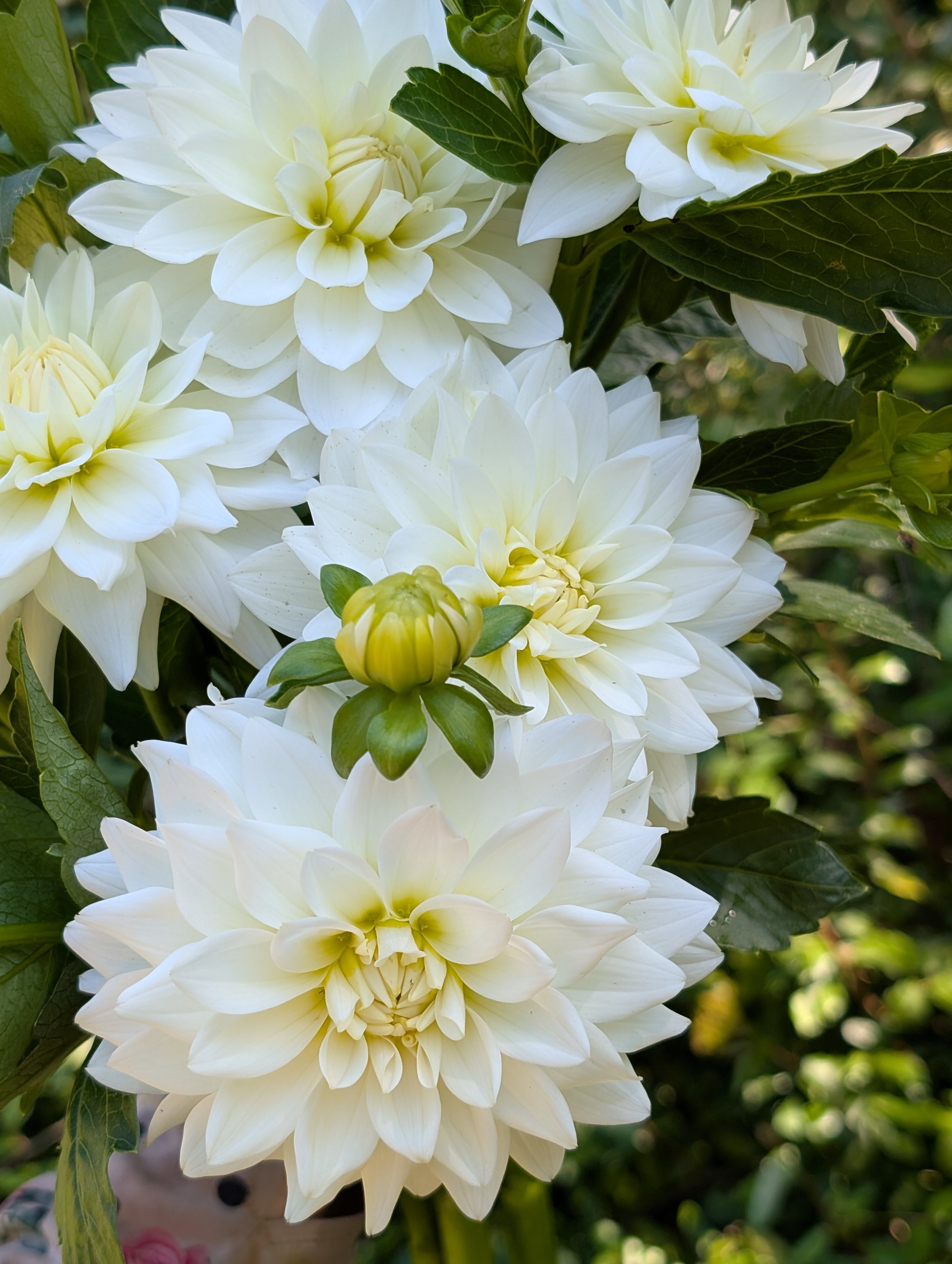
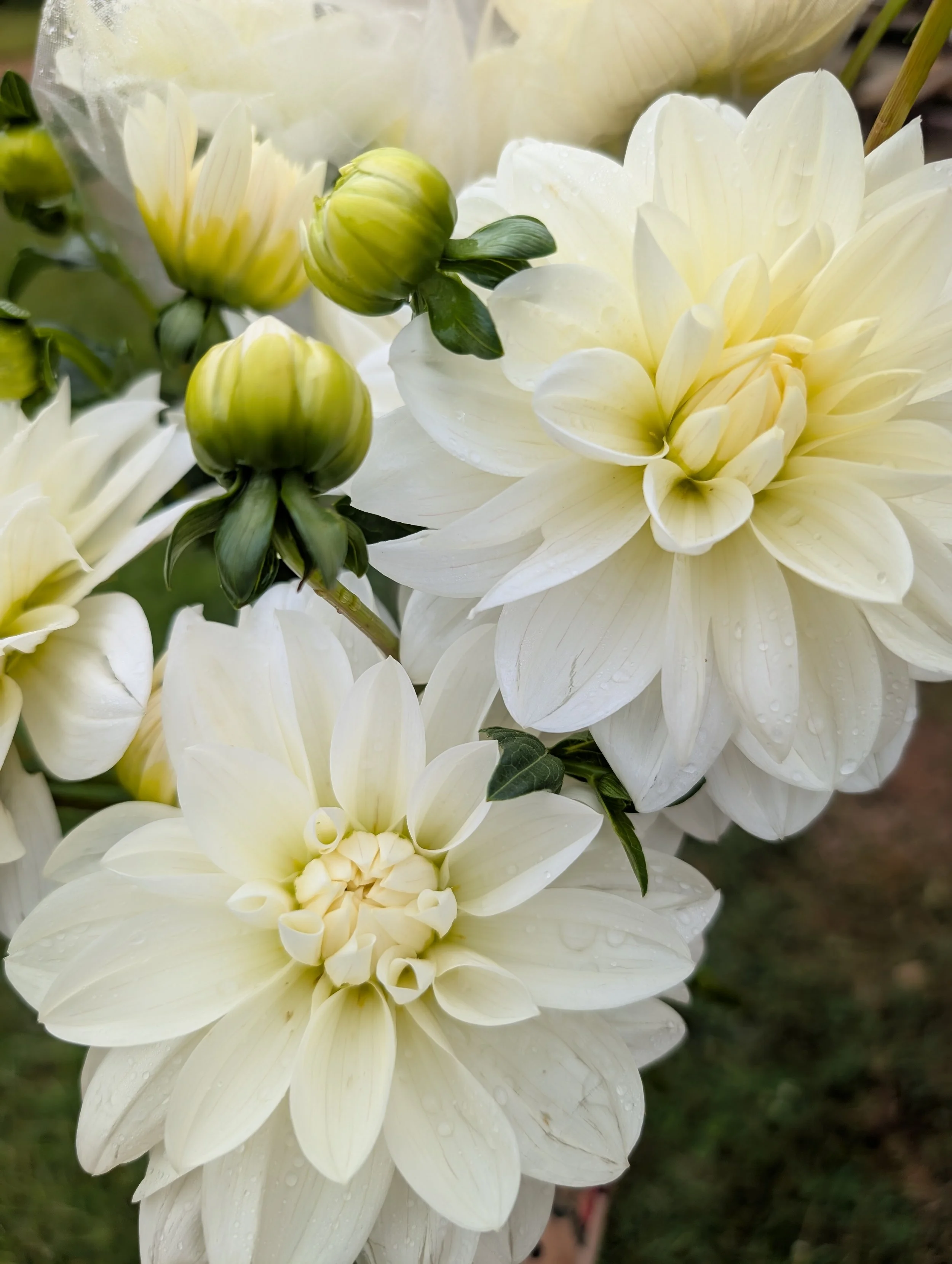
Bridezilla is especially pretty late in the season as it gets very creamy in color and very fluffy- almost peony like!
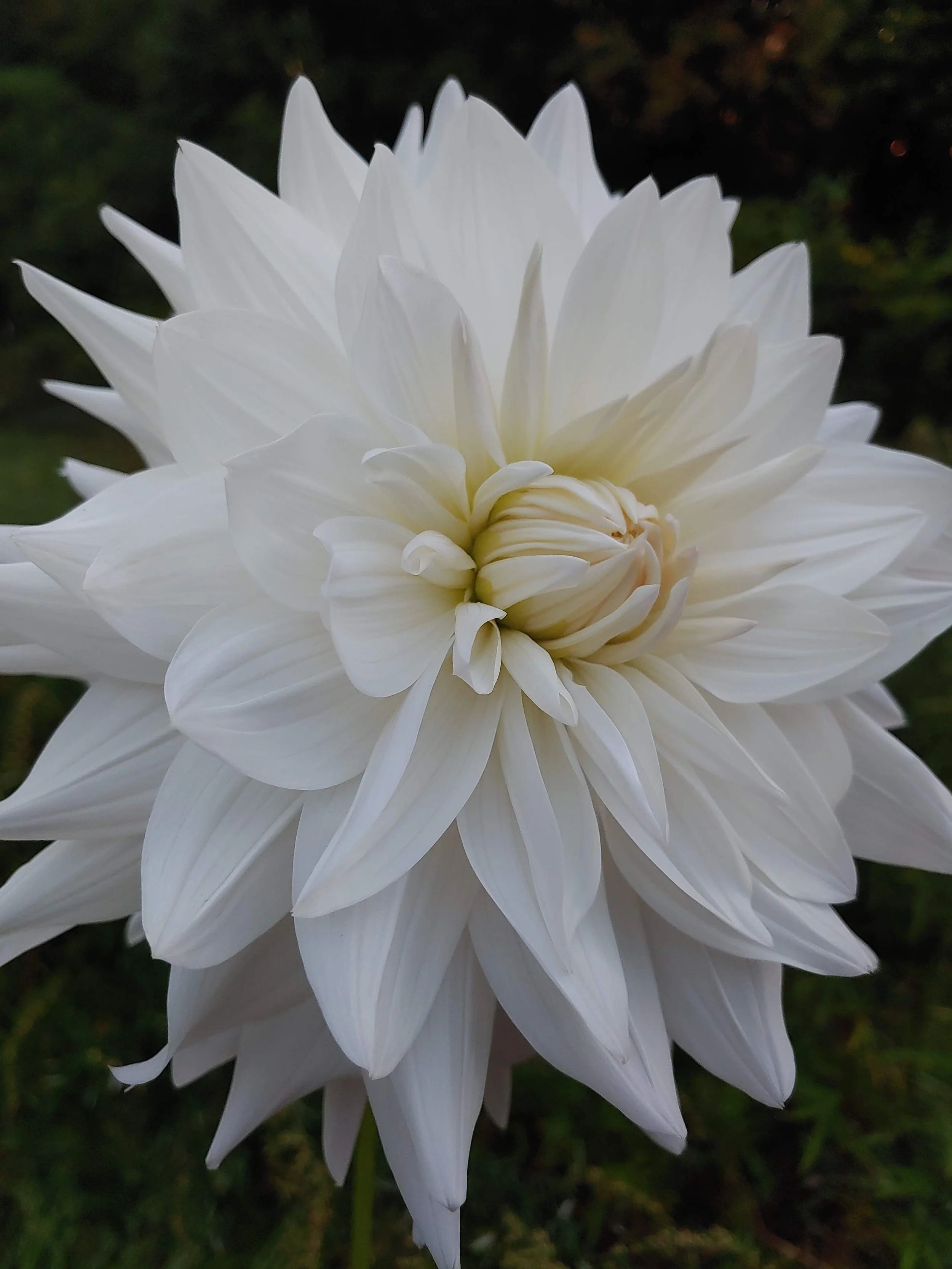
Roque Starburst
Roque Starburst has been a long time favorite when it comes to larger whites. Although not always the best tuber maker- I’ve had trouble keeping it some years which is why I rarely sell it.

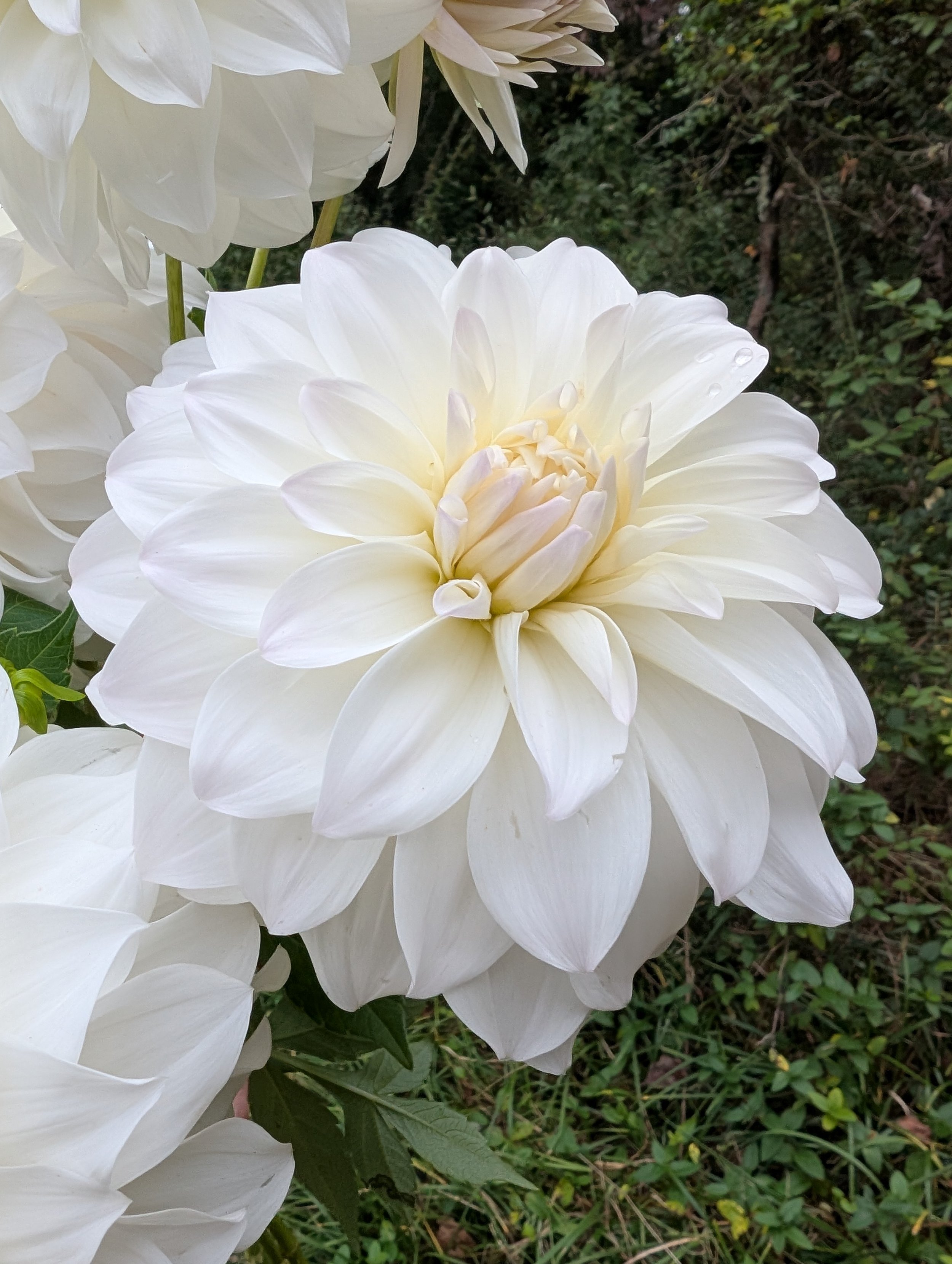
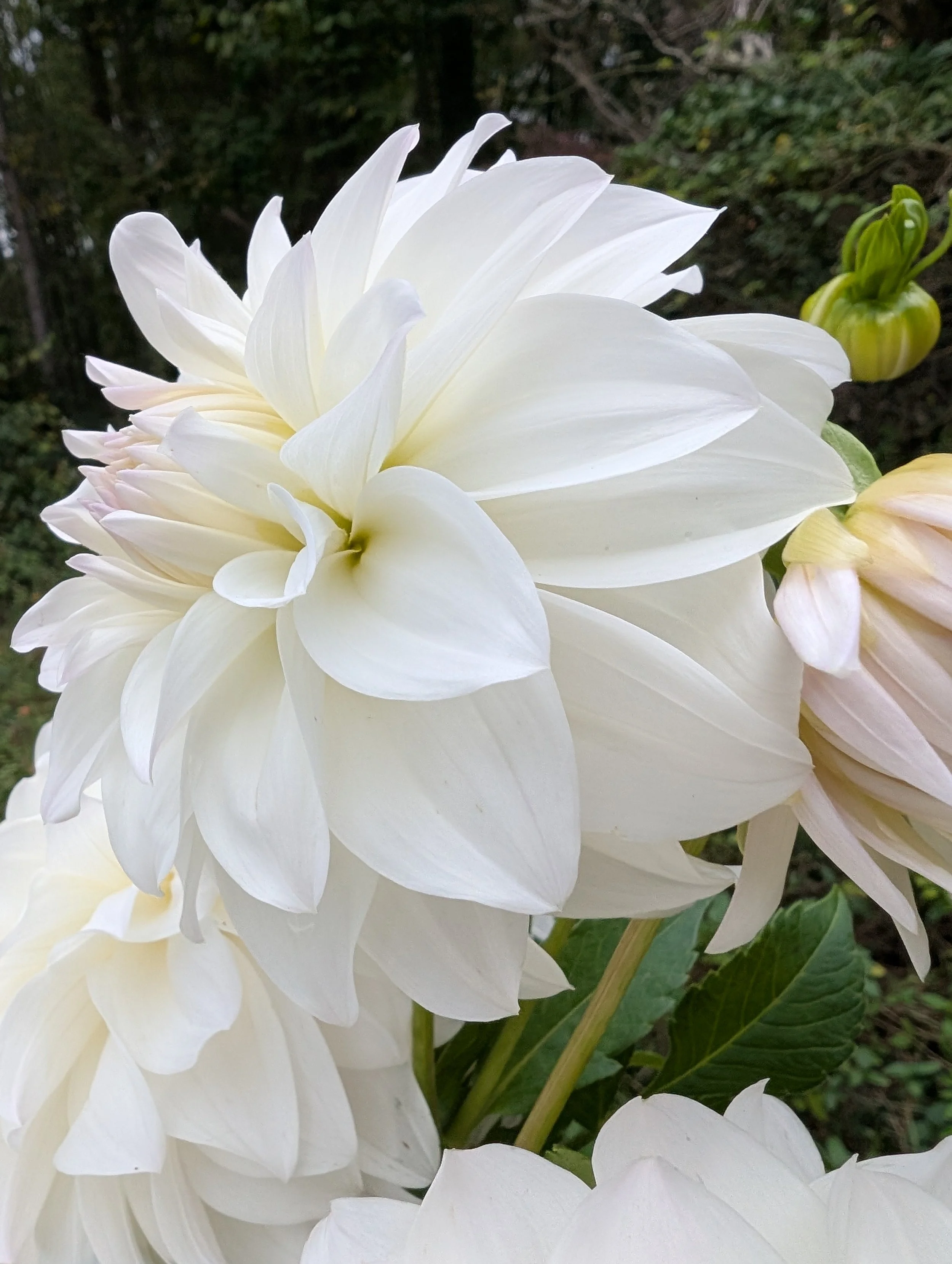

Sterling Silver has become a new favorite this year- second year growing it and wow— talk about fluffy pillowy clouds of dahlias! It’s a bit later than my other whites but I think it’s worth it!


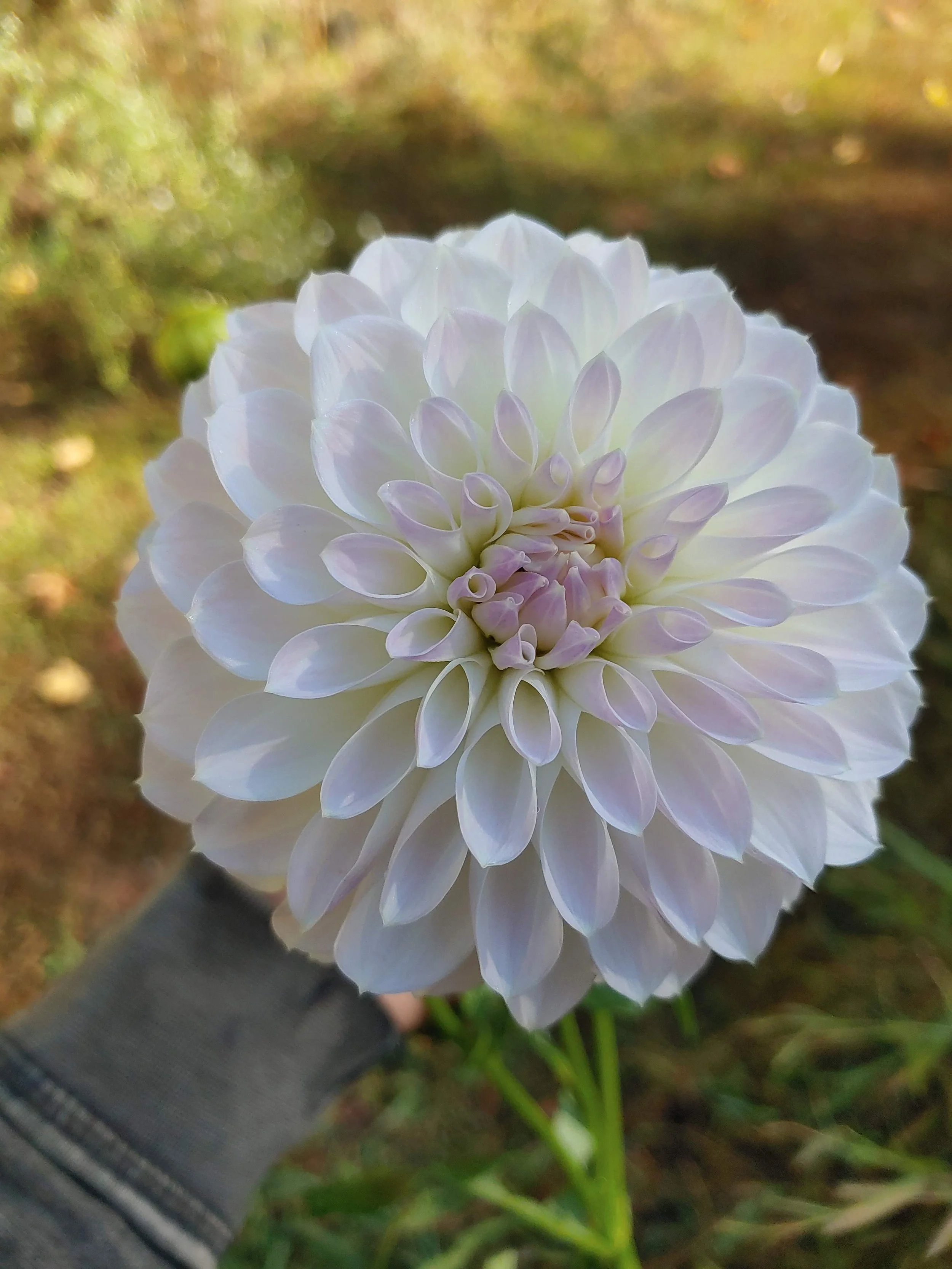
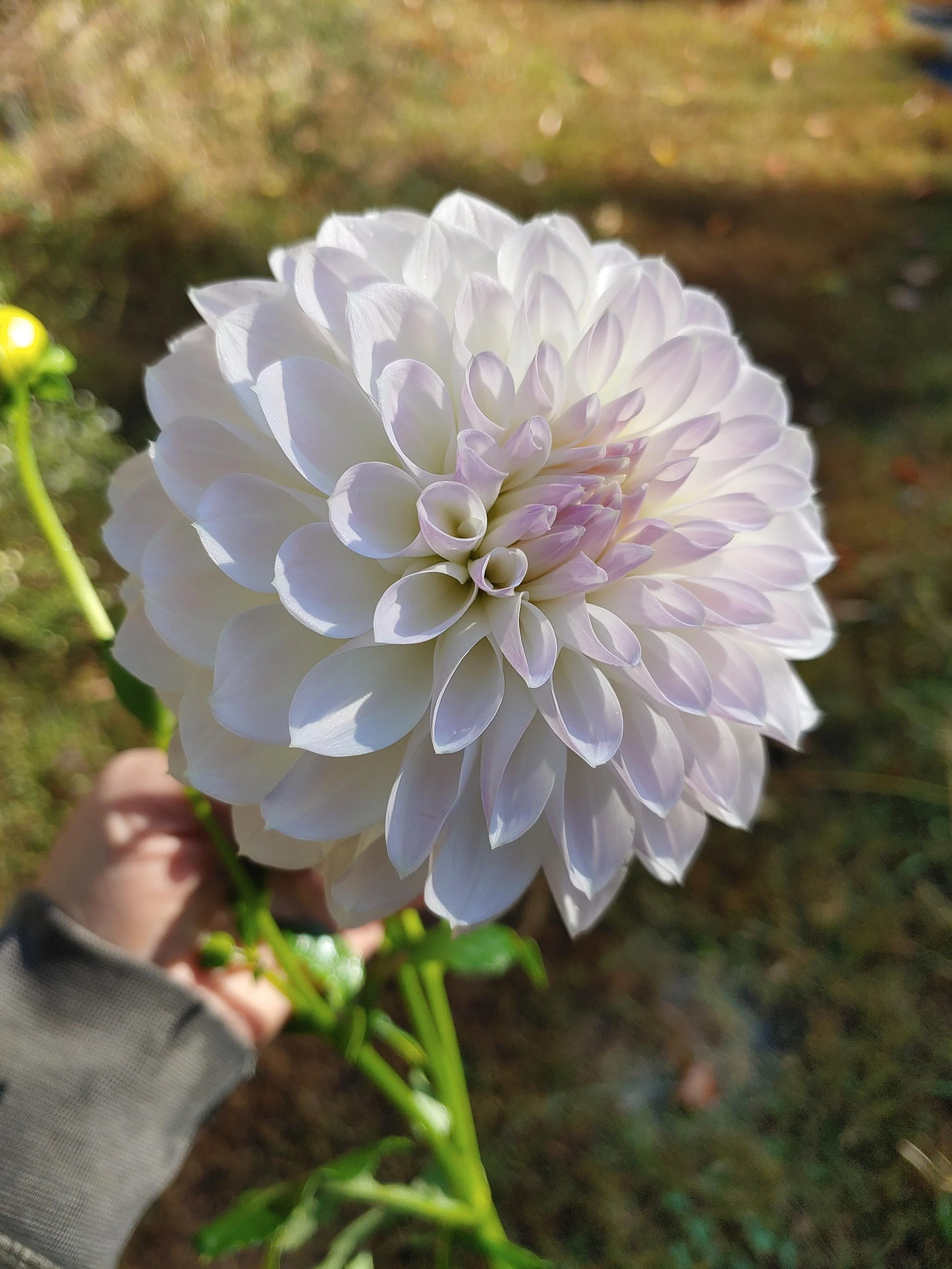
KA’s Snow Jo is a beautiful iridescent white. I can’t recommend this one for the South but if you don’t live down here- grow it! Prolific and gorgeous color hits on a white backdrop!
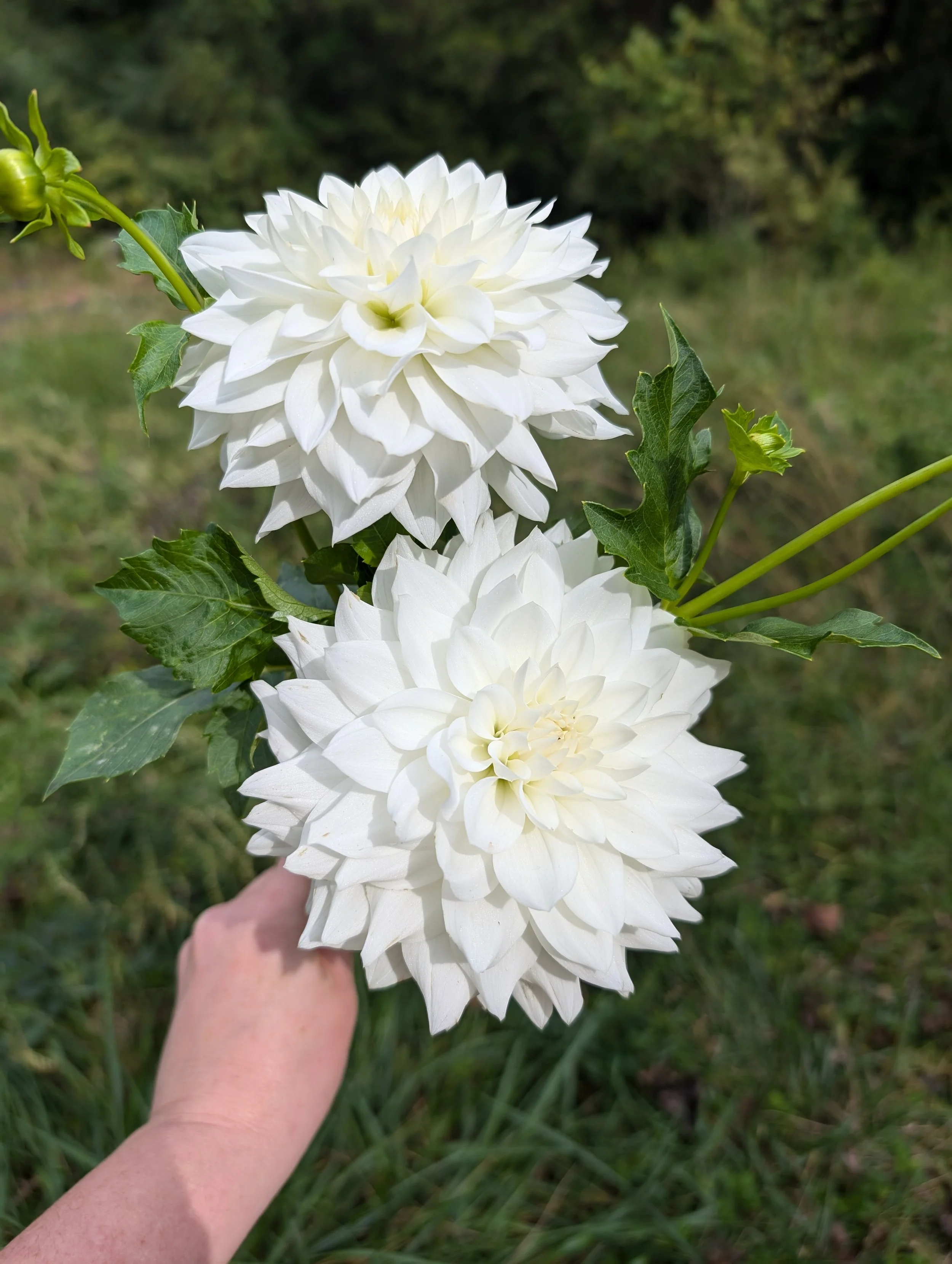
Beaucon White
Beaucon White is probably my favorite dahlia to recommend for wedding work if you want something along the decorative lines. It’s size is perfect - not so big that it steals the show but definitely still gets noticed.
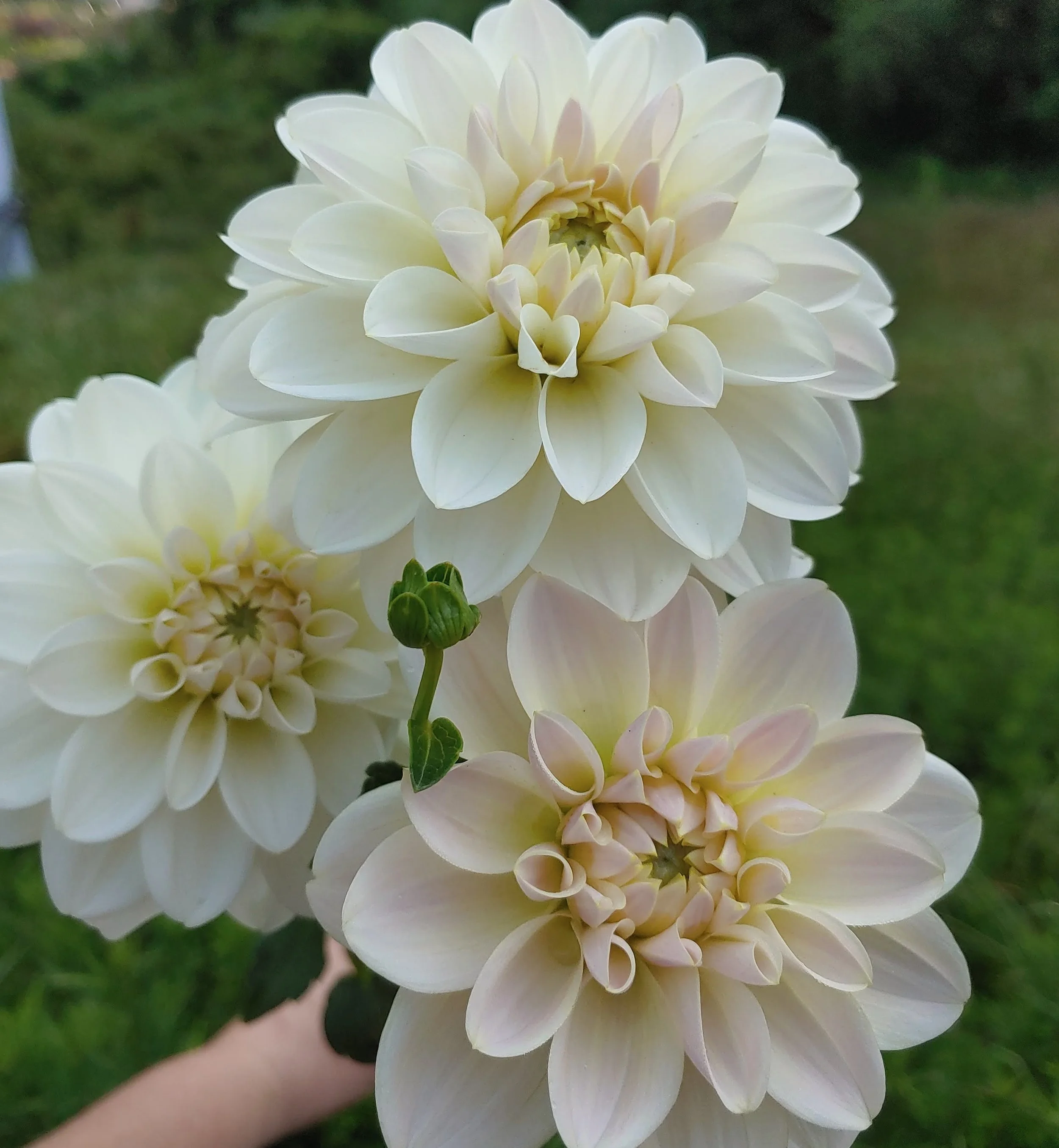
Caramel Antique
From a color perspective- I love this dahlia but she makes the worst tubers that are impossible to store. Maybe grow it from cuttings each year. I finally had to give up on it even though I love it! Although I think I may have found a replacement ;)
So what’s your favorite white? I always love trying new white varieties because I can never have enough white dahlias!
2025 Dahlia Year In Review
2025 was a good year for dahlias. Was it a perfect one? Nope! But overall it was a good year.
Let’s break it down:
Win #1-The Horse Field- We broke in 3 new dahlia fields this year. We call this one the horse field because it used to be a horse field (original huh?) but at least everyone knows what I’m talking about. Originally I tilled it fall of 2024 and then we made our rows Spring of 2025 - raised them way up to get good drainage b/c the area is very flat. Lined our pathways with landscape fabric to deal with the weeds and then we planted. We used about 80% rooted cuttings- really only one variety (Sylvia) was primarily tubers because we lost our stock of that variety in the hurricane the previous year.
I think this field was probably our most productive and definitely the most uniform and consistent. That’s one of the great things about rooted cuttings— you get really uniform growth which is really helpful for keeping your pest control and fertilization consistent.
We dug a few rows of this field but most of it will stay for some early dahlias next year. But I’m happy to report that we had excellent tuber growth from those rooted cuttings. Nice high quality clumps just waiting to be divided this winter.
In this field we grew: Coseytown Gale, 20th Ave Gwen, Cafe Au Lait, Rock Run Ashley, KA Mocha Katie, Sylvia, Sweet Fabienne, Blizzard and Sweet Nathalie. We dug Coseytown Gale, KA Mocha Katie and Blizzard.


Loss #1: Broad Mite Infestation- We lost the majority of a row of Linda’s Baby plants to a serious broad mite infection. Thankfully we had 2 rows but it definitely hurt our production since that is such a good heat tolerant variety and one we rely pretty heavily on. The infection got so bad and the plants were really struggling so I decided to cut the plants back hard. These plants had been grown from tubers so I knew there was a possibility they could resprout but I also knew I could lose them all. Unfortunately, that’s what happened. But they were so poorly that it was really the only option- we had sprayed several times but couldn’t get it under control. We cut back and put all the foliage in a trash bag so as not to add the mites to our compost pile! I had maybe 10% of the cut back plants that survived.
What’s the lesson learned: We’ve been getting mites in around the same time for a couple of years now so we will begin spraying preventively for them instead of waiting to see the first signs. Left unchecked they quickly get out of control. But I definitely know the timing (early June) for my farm.


Win #2- The Hurricane tubers rebounded! We had some severe rot in one field after Hurricane Helene last fall. We lost 2 whole rows from that field but 2 of the rows were on 2nd year growth so I let them be over the winter, hoping that there were large tuber clumps underground. I really began to doubt when last Spring, only a few plants had sprouted(first photo below taken on May 20). But I gave it time— and turns out that’s what it needed. It took until mid June for the row to fully resprout. The previous year, I was harvesting blooms off this row in mid June. The middle phots below is from July 31. Third photo is September 24. All they needed was a little time!


Loss #2- Tuber rot on my new varieties- This one was frustrating but it could have been sooo much worse. I always plant all my new varieties in the same row. That way everything is in the same place when I’m ready to take notes/photos. I planted the tubers at the front of the row (left photo) and the rooted cuttings (right photo) in the back half. We lost about 80% of the tubers. Fortunately we had taken rooted cuttings of the majority of them. So we were able to evaluate and those cuttings made good tubers. More and more I’m seeing a high percentage of rot when I order in new tubers — it’s hard to acclimate new dahlias to my hot climate. So we are protecting our investments by making cutting backups!


Win #3- Dahlia Days Field Tour! I think this was my favorite part of the whole season. We were able to open our field for tours twice this Fall! I had so much fun and I think you all did too! You wanna talk about dahlia geek out fest??? Absolutely! Last weekend after our Sale opened, I had several of you tell me how much the tour influenced the varieties you chose to add to your gardens next Spring. How much you enjoyed getting to see the varieties in person, how you loved things you didn’t expect! We will definitely be doing it again next year!


There’s no such thing as a perfect dahlia season but this one came as close as any ever has! Yes, it had it’s struggles but we reached so many milestones that I’ve been reaching towards for many years!!
My Husband Flew Me to Paris to Buy Flowers For My Birthday
I had a birthday in October and my wonderful husband flew me all the way to Paris to buy me flowers from the oldest flower shop in Paris! And it was everything you would expect it to be— very hallmark movie experience!

Ok- so we didn’t fly to Paris just to buy flowers. We are farmers remember- we can’t afford to jet off to Paris just for flowers! But sometimes when you get the chance to write a really fantastical headline, you have to take it.
Here’s the real story. We have 11 wonderful nieces and nephews and over the past few years, we have been taking them on an international trip when they graduate high school. This year it was my nieces turn. She chose Paris (we also went to Iceland -24 hr stopover, London, and Scotland). So the running joke in our household was that my husband was flying me to Paris for my birthday since we were going in October.
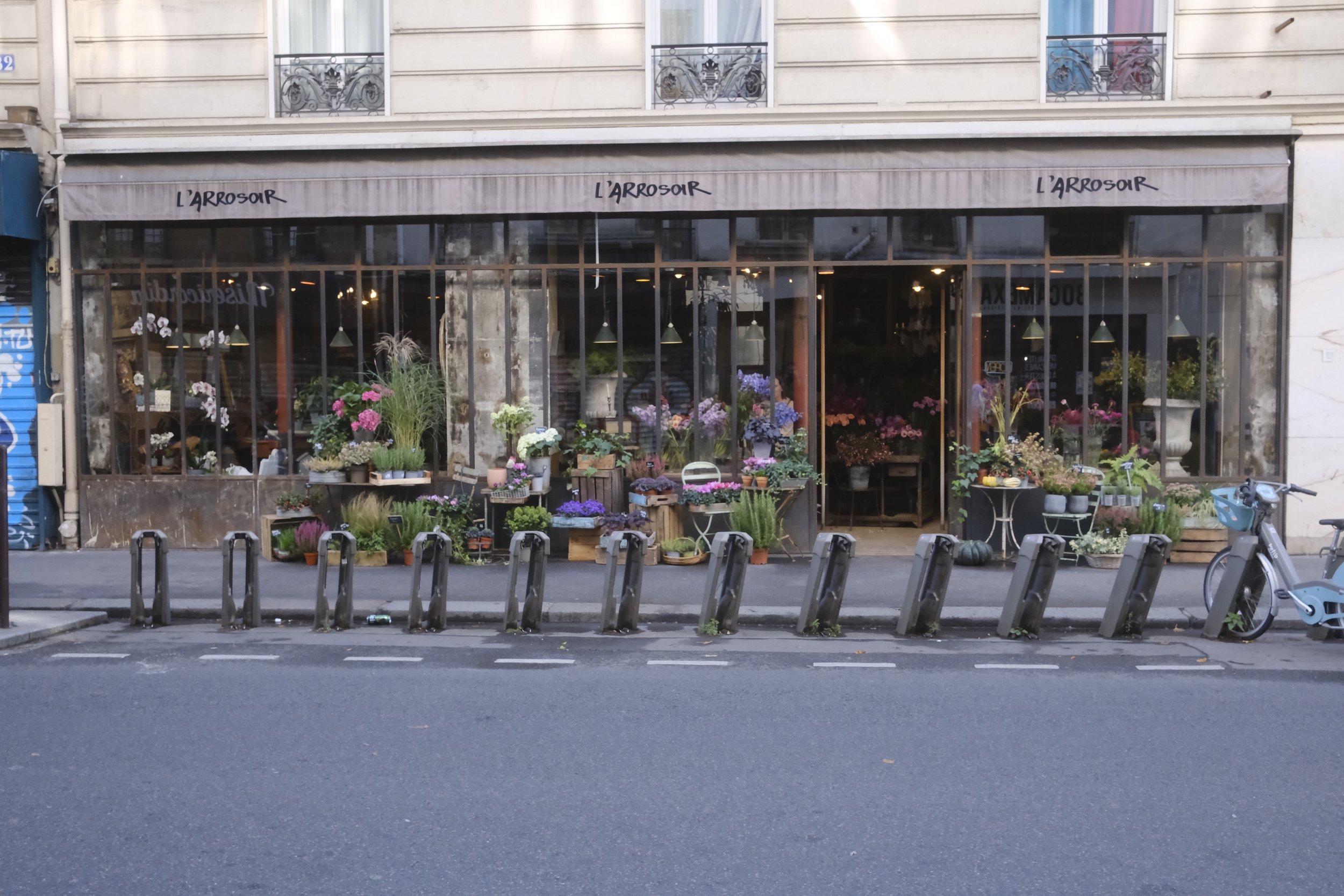
For years, I’ve been following L’arrosoir on Instagram- I think I first heard about them on the Flower Podcast. The shop is owned by Adrienne Ryser, an American. I had to take advantage of the opportunity. On our first day in Paris, we struck out to visit the oldest flower shop in Paris.
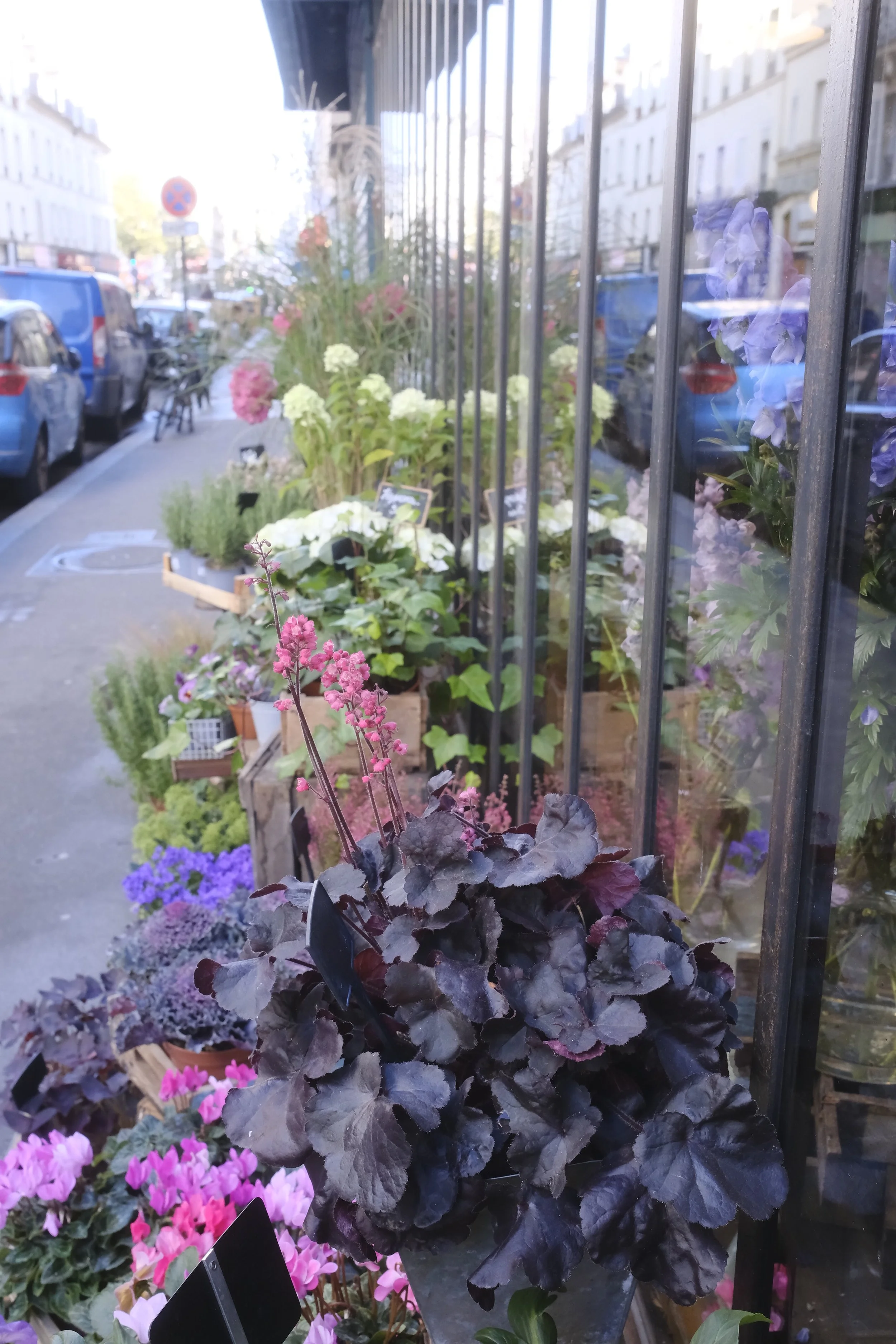
As you approach, there are flowers spilling out on the sidewalk. It’s a display that will definitely stop you in your tracks. This display is created fresh each morning, the process is called La Vitrine.
As you enter the shop, you encounter the most sumptuous flower displays. So many textures and colors, all displayed beautifully!

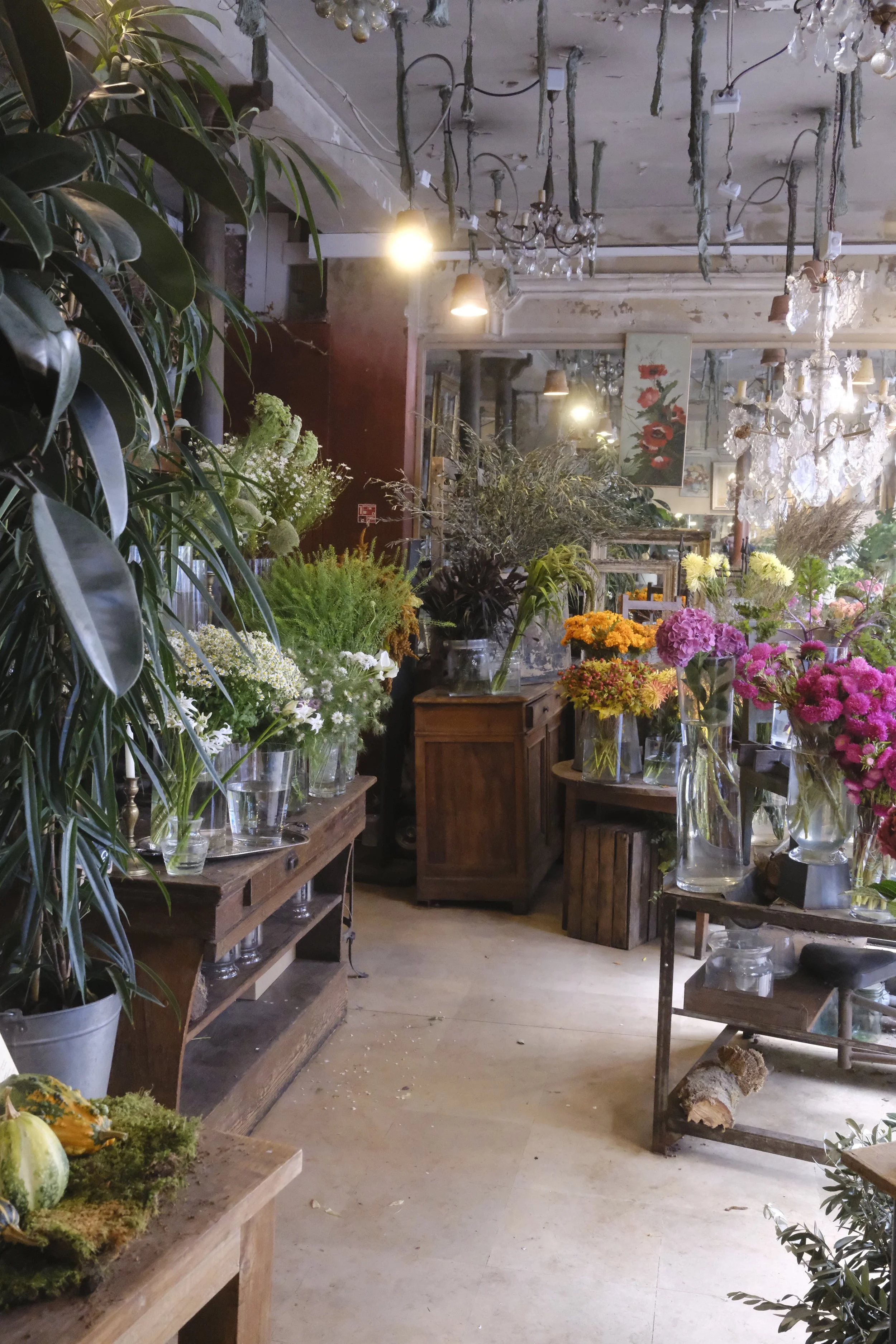
I wondered for a few moments, just enjoying the beauty of it all. There was so much to choose from- lots of seasonal goodies. Rose hips, dahlias, hydrangeas, asters, cress, roses, scabiosa and amaranth. I even saw some aconitum- first time I’ve ever seen it in a floral shop. Makes a good cut flower but not commonly seen. It’s the tall blue flower seen through the window in the photo below.
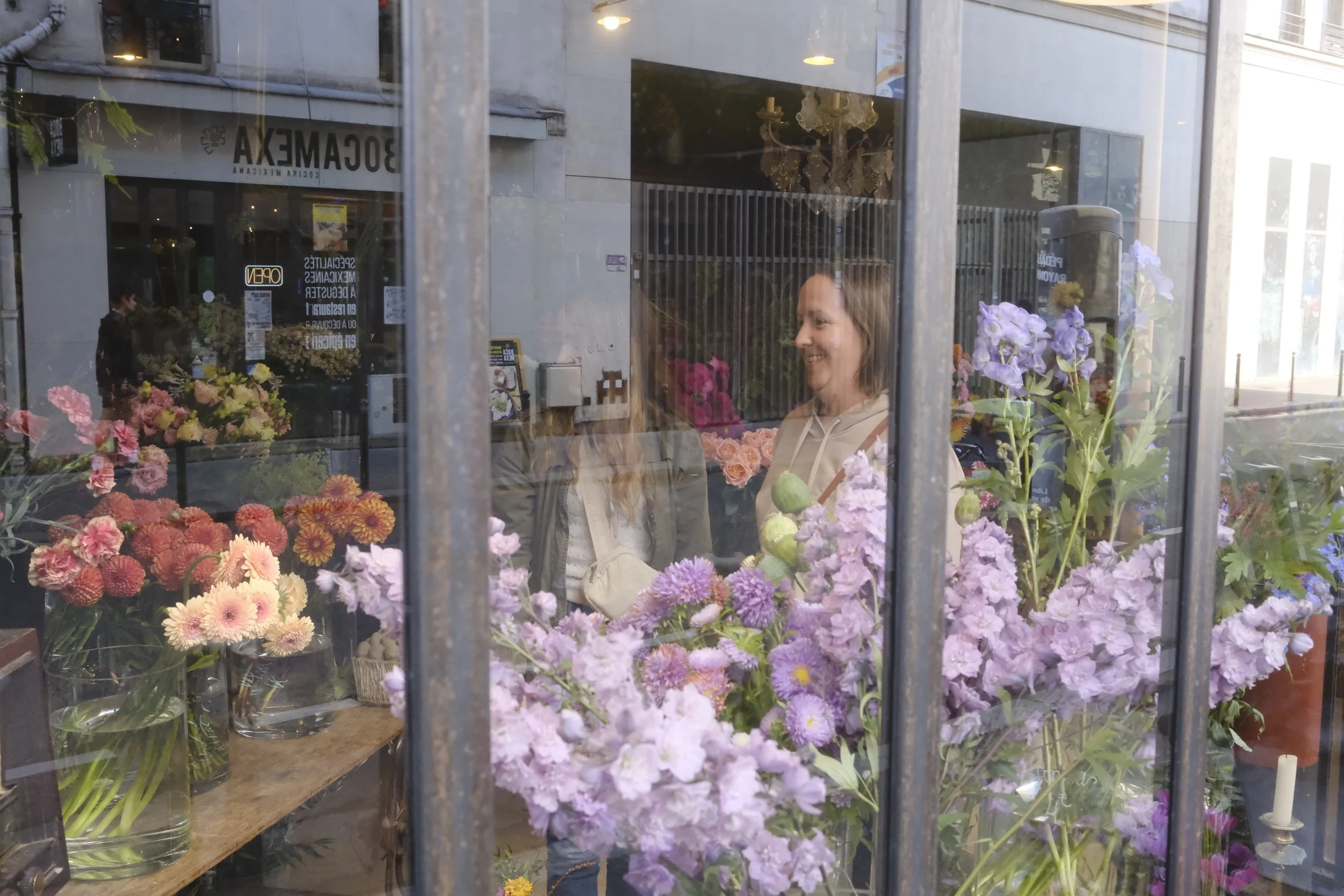
After browsing for awhile, I began working with one of the florists to design a bouquet. We began chatting as flower people do. They enjoyed hearing about my flower farm and I enjoyed hearing about working in a florist in Paris. I chose a bouquet of warm fall colors which included some roses, lisianthus, crocosmia pods, eucalyptus, delphinium, pink clematis, rosehips, amaranth and astilbe. I actually declined the dahlias- I told her I had a few 1000 at home. I kinda wanted something different! After I chose my stems, the florist whipped it up into a beautiful bouquet! We enjoyed it in our air-bnb all week.

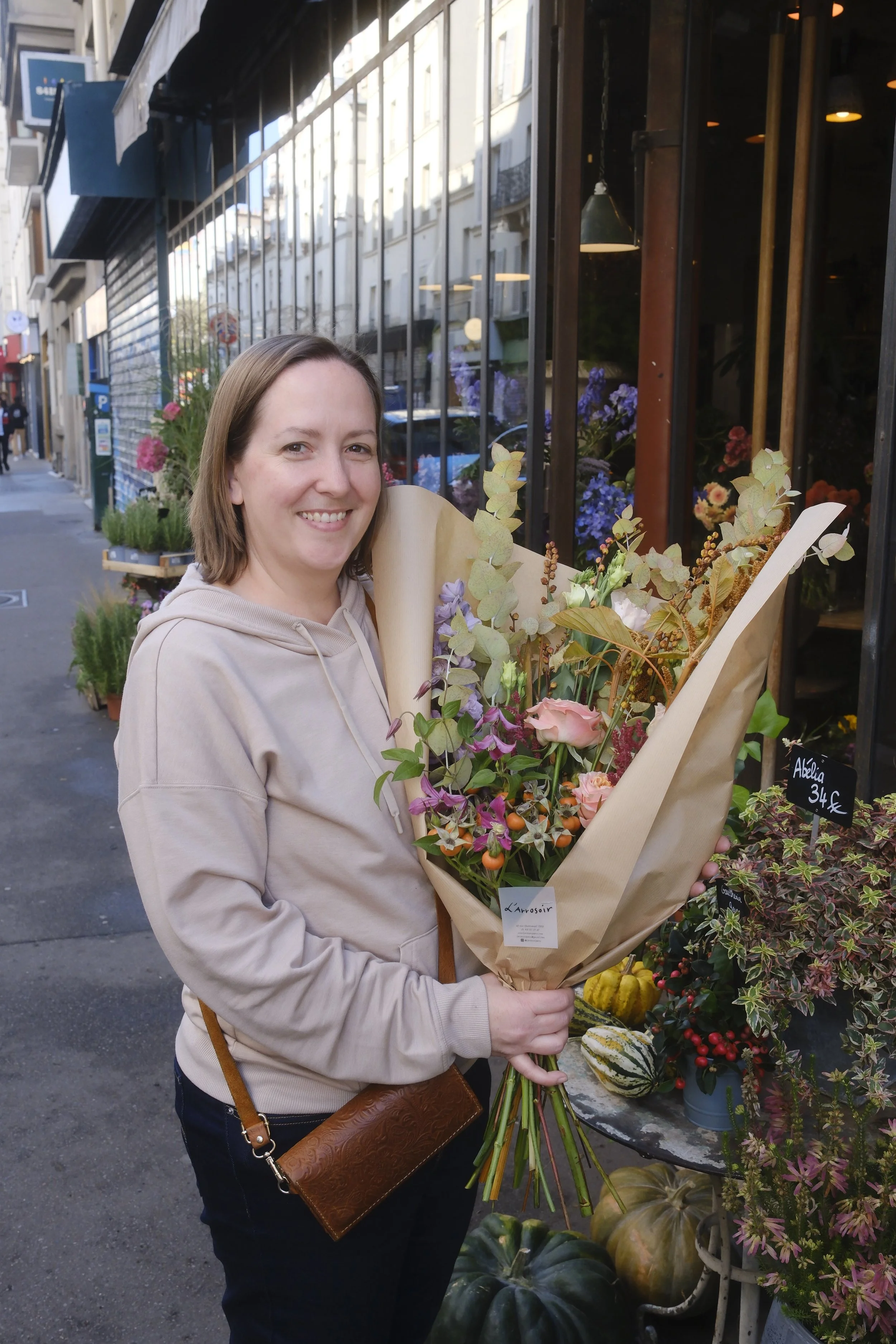
The shop is truly beautiful and everything you dream of in a Parisian flower shop. The light streaming through the windows is gorgeous! The smells are lovely and floral and the people are kind and welcoming.


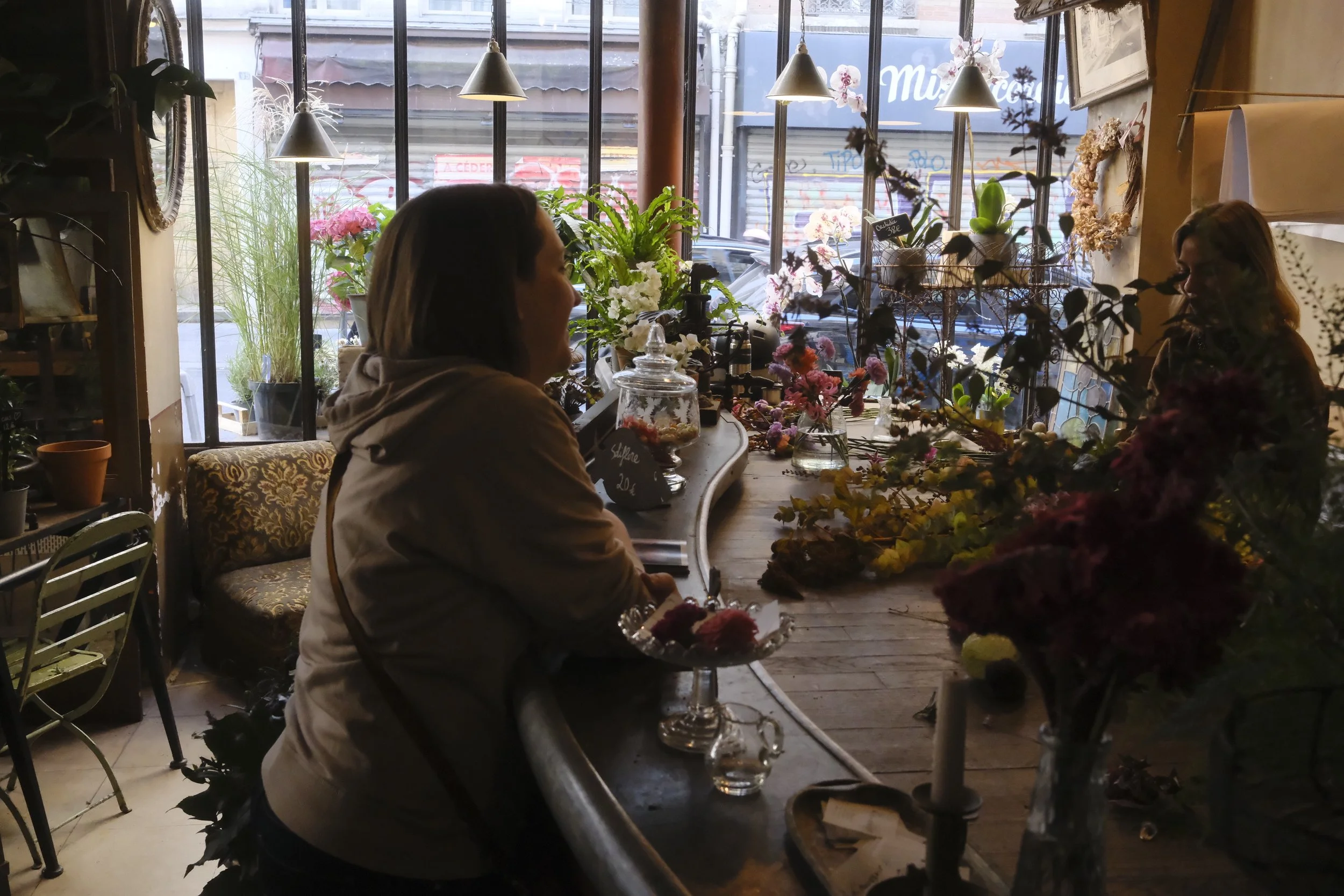
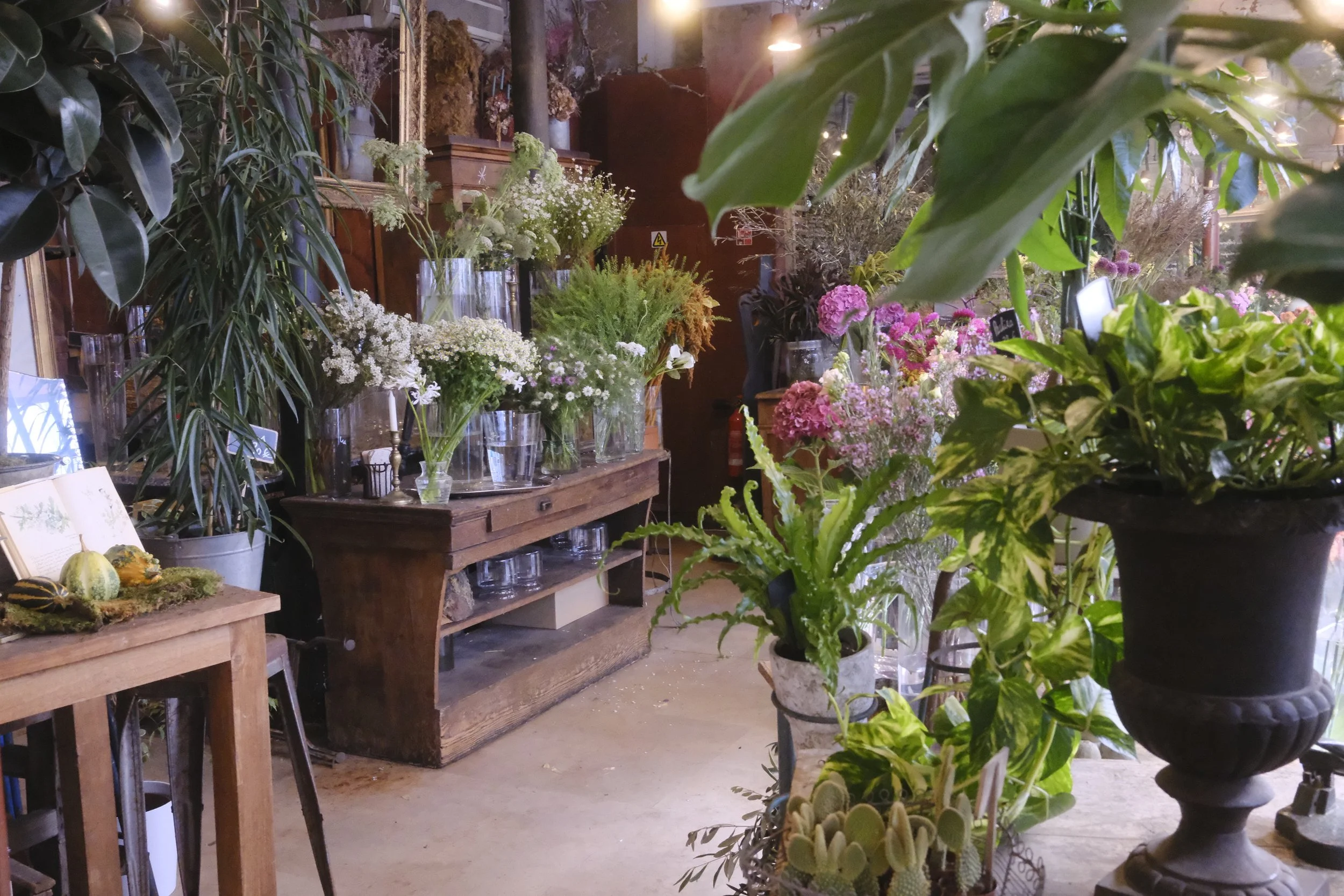
If you ever get the chance, you absolutely must go! L’arrosoir- a flower lovers dream come true!

All photos by aforementioned wonderful husband, Joshua Smith.
Off With Their Heads!
Dahlias bloom and bloom — But only if you keep the old blooms cut off.
The process of removing spent blooms is called deadheading. Or as I like to say “ Off with their heads!” It can be a rather therapeutic process.

Later in the season I find we do more deadheading because there are less “quality” blooms. We get more smaller blooms or crooked stems because the stems get weaker as the season draws to a close.
On Fridays, we’ve begun to deadhead our field instead of harvesting it. Early in the season, I can usually find a place for the Friday blooms. I call them the “Friday Blooms” because at that point it’s too late to sell them to our florists (unless we get a last minute panic call) and since we don’t do farmer’s markets- they occasionally don’t have a home. Most weeks we donate/give away or we have an event at the farm to use up the Friday Blooms. But late in the season like this, it’s less labor to just deadhead them. The deadheading process takes an hour and a half whereas harvesting would take several hours.

I also think it’s not a bad idea to leave as much foliage on the plant this time of year to photosynthesize and let the plants make as many tubers as they can. When the daylight hours begin to shorten, those plants really get busy making tubers so why not give them a boost with some extra plant material.
If you don’t deadhead, the plant will begin to make seed heads. And if you are a dahlia breeder, then by all means- collect those seeds! But if tubers are your goal once the flowering stops, get to deadheading!

The Case for Cuttings Over Tubers
Every year I (like every other dahlia lover) buy in several new varieties. More than I should because we all know it’s hard to stop. In recent years, I’ve begun taking cuttings from these new tubers as they arrive. I do this for a few reasons but mainly so that if I really like a new variety, then I’m already a bit ahead. I try to get 2-3 cuttings from each tuber that I buy.
Usually I plant the original tuber and the cuttings together. But this year I changed it up! I planted all the tubers together and all the rooted cuttings together. They are all in the one row pictured below with tubers at the beginning and cuttings past that.

Well, the tubers were at the beginning but as you can see from the picture, the majority of them didn’t make it. This phenomenon of losing new varieties grown from tubers is way too common in a hot nasty climate like mine. I talk to other growers who have the same issue. I’ve found that over the years, that I’ve lost way too many new varieties that way ( and lots of money too!) This is why I began the cutting process from new tubers awhile back.
I’m increasingly seeing that a rooted cutting establishes better in my harsh climate. With nothing but roots to go on, the plant is forced to go search for food and water. Tubers get lazy and then our climate happens to them- We get too much rain or not enough rain and our soil temps get way too hot. The window we can successfully plant tubers gets smaller every year. But rooted cuttings with proper care can be planted pretty much any time during the frost free period.

This year our fields were planted around 70% from rooted cuttings and I have had one of the best dahlia years I can remember. My loss percentage has decreased dramatically. The cuttings weathered the harsh summer months so much better! The cuttings establish so much easier- you don’t have to worry about too much rain- they handle high levels pretty well. You can irrigate more if you are dry without worrying about rotting out your tubers. This also cools the soil down when it’s dry/hot.
I also like the uniformity of growth from cuttings. Tubers sprout at different rates. But if you plant the same size cuttings out all at once, they grow very uniformly. And as a cut flower production farm- this can be hugely beneficial in helping to predict your crop. Cuttings can also help you succession plant your dahlias if you live in a long season climate. It’s nice to have some fresh plants when all the others are getting tired.
The more I observe the difference between the tubers and cuttings- the more benefits I see to cuttings in a harsh climate.
