So You Wanna Grow A Dahlia?
You’re browsing around the internet… you are stopped dead in your tracks at these beautiful bodacious blooms! And you must have some! Before you know it, your clicking the order button and now you have some dahlias on the way to your door this Spring!
You live in the post retail therapy bliss for a few days and then the reality sets in (b/c most likely by that point, you’ve hit “buy” a few times.) You suddenly realize you have no idea what you are doing, where you are going to grow these or even what kind of care they need.
Sound familiar? Don’t panic— over the next few weeks, we are going to walk through how to get started in your dahlia journey. How to move from “I’ve got 50 dahlias coming and I don’t know what to do” to being confident that you can have a beautiful harvest of bright bold blooms this Fall.
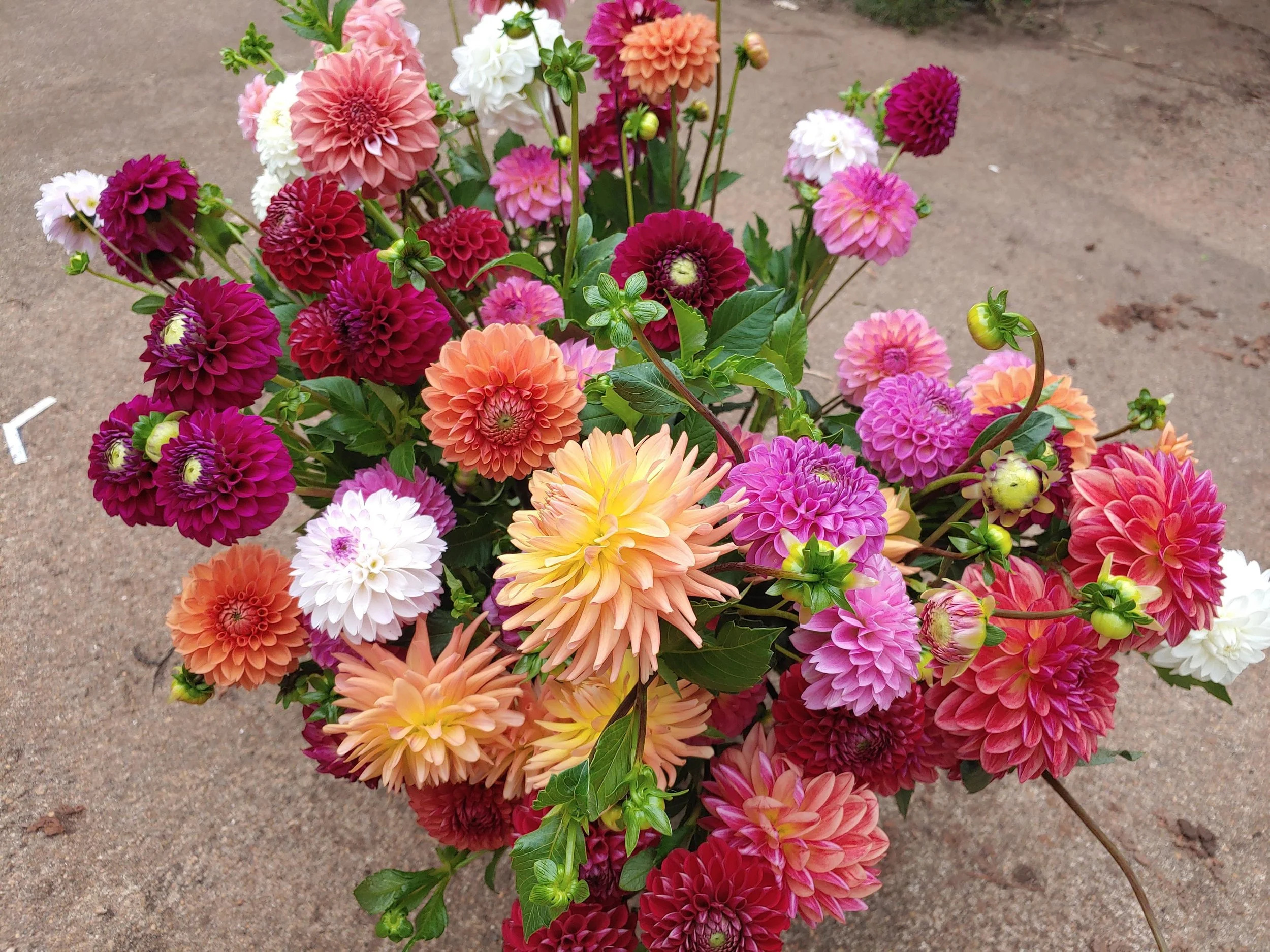
Let’s begin. Dahlias are sold usually in the winter/early Spring months so chances are you have a bit of time on your hands before they arrive. (even if not, these steps can be accomplished quickly) The interim time between purchase and arrival can be used wisely so let me walk you through what to focus on right now.
First, let’s figure out where to plant your dahlia. Plants need light. Light is usually one of the harder things to alter in your landscape so it’s worthwhile to consider it first. Dahlias need full sun as their light requirement. Full sun is defined by 6 hours or more of direct unfiltered sunlight. So next time you have a bright sunny day, go look through your outside space for any area that has this requirement. You’re going to want to look at multiple times on the same day as light changes throughout the day. In extreme heat climates- zone 8b and above it can be helpful to have that full sun be in the earlier part of the day so by the time it gets really hot, your dahlias are getting a bit of shade or filtered sunlight.
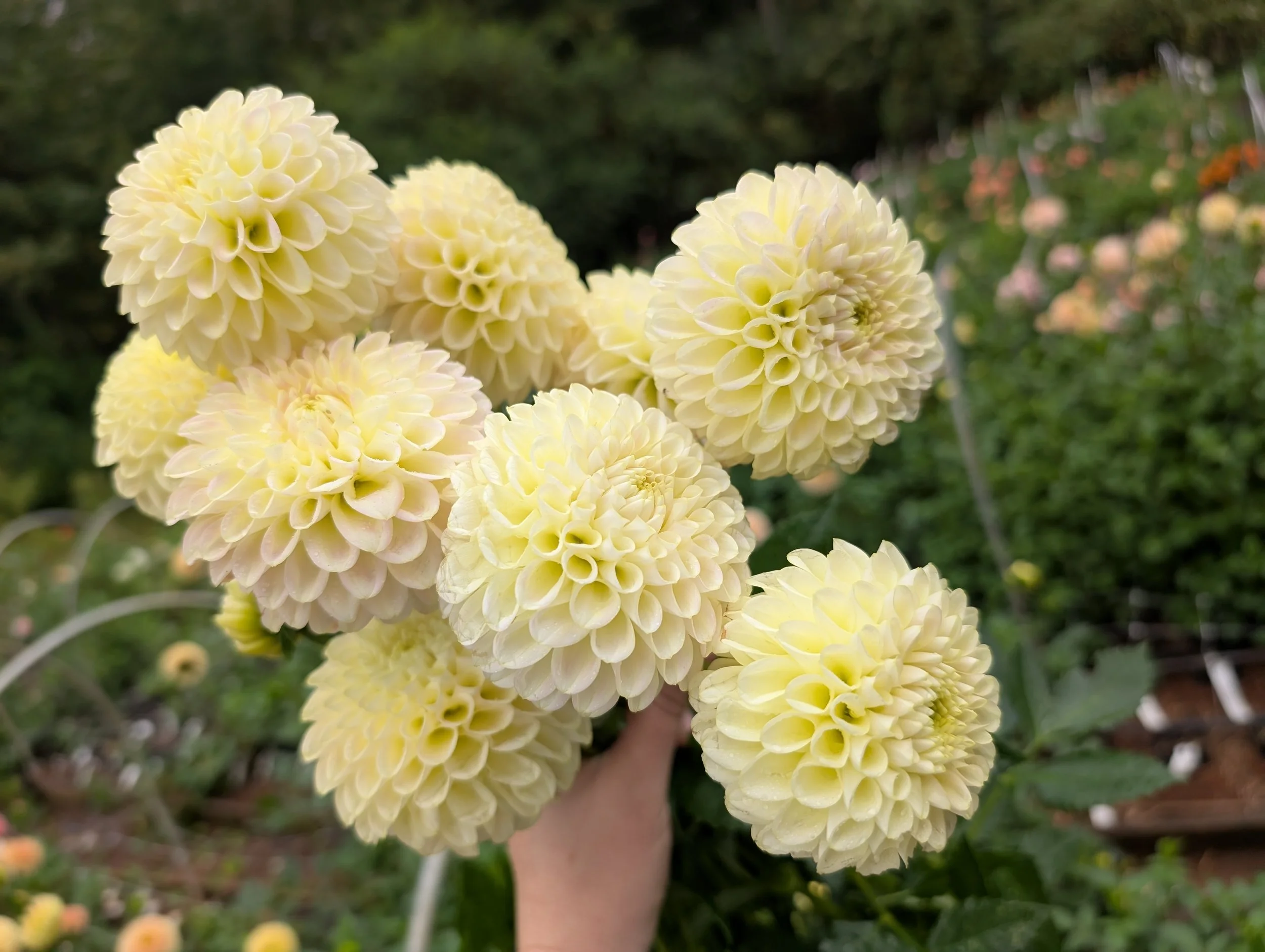
Next, let’s look at access to water. Do you have a hose, irrigation system, sprinkler? How far do you have to go to get water? Having easy access to water is important because if you can water your plants easily you are more likely to do it. No access or limited access to water is a recipe for stressed plants.
After this, let’s consider our soil. Start by taking a soil test. DON’T skip this part. So many people do. A soil test will tell you so much about your natural soil and give you the information you need to make sound decisions about soil improvement and fertilization going forward. You can send your soil test to your local extension service or an agricultural testing laboratory.
Dahlias prefer soil with good drainage. You may be lucky enough to live somewhere where good drainage occurs naturally but that’s rare. Most of us are dealing with harder clay soils or poor soils. So in the time before your dahlia arrives, it’s worth the effort to improve your drainage. This can be done in a few ways: Raise your growing area- mound your soil up (even a few inches helps) or create a raised bed with permanent sides. You can also mix in compost - adding organic matter always improves drainage in soil- it creates natural air pockets and pathways for water to move. Both of these put together is an ideal situation. The last part of soil consideration is to remember that building good soil is a multi-year process. Honestly it never stops. However, I tell you this so you don’t stress over getting it “perfect” from year 1- there is no such thing as perfect soil. Just take some steps to make your soil better each year.

So your “homework” is to do 3 things:
1. Figure out where you have full sun
2. Determine your access to water
3. Take a soil test
I’ll be back in our next post to talk about what to do with your tubers and cuttings when they arrive and also how to plant your dahlias.
This post has just skimmed the surface of how to be a successful dahlia grower. If you’d like to hear me teach live about getting your dahlia garden started right- I’m hosting a “Dahlia Bootcamp” on March 12 inside The Petal Society. It will be a live workshop - we’ll have dahlia giveaways, plenty of Q&A time, and everything you need to know to get started successfully with your dahlia garden this Spring!
Continue on to Part 2 of our Beginner Dahlia Growers Series
