



Don’t Rush It, You’ve Got Plenty of Time
I’m writing this post as much for me as for you, my dahlia lovers. Don’t rush it. I’ve heard too many tales of woe recently. Tales of underestimating the weather, rushing seedlings out without fully acclimating them and foregoing growing a strong root system, and forgetting to water.
Life is extra chaotic right now, the weather has been VERY extra this year so it’s definitely a time to slow down and be patient.
I’m very guilty of pushing, pushing, pushing this time of year. Once Mother’s Day passes- it’s go time on the farm. A lot of the spring crops are finished and that means we can start ripping and planting dahlias. But this year has been different. We had a delayed start to our Spring crops so some are still going-which means I have to wait. But as I take a moment to calm my impatient brain, I’m seeing the advantage. Waiting means time to grow larger root systems on my cuttings. I don’t feel like the whole field needs to be flipped at once. We can rip crops out as they finish and replant. This gives us time to do it right and pay attention to the plants as they are settling in to their new home.
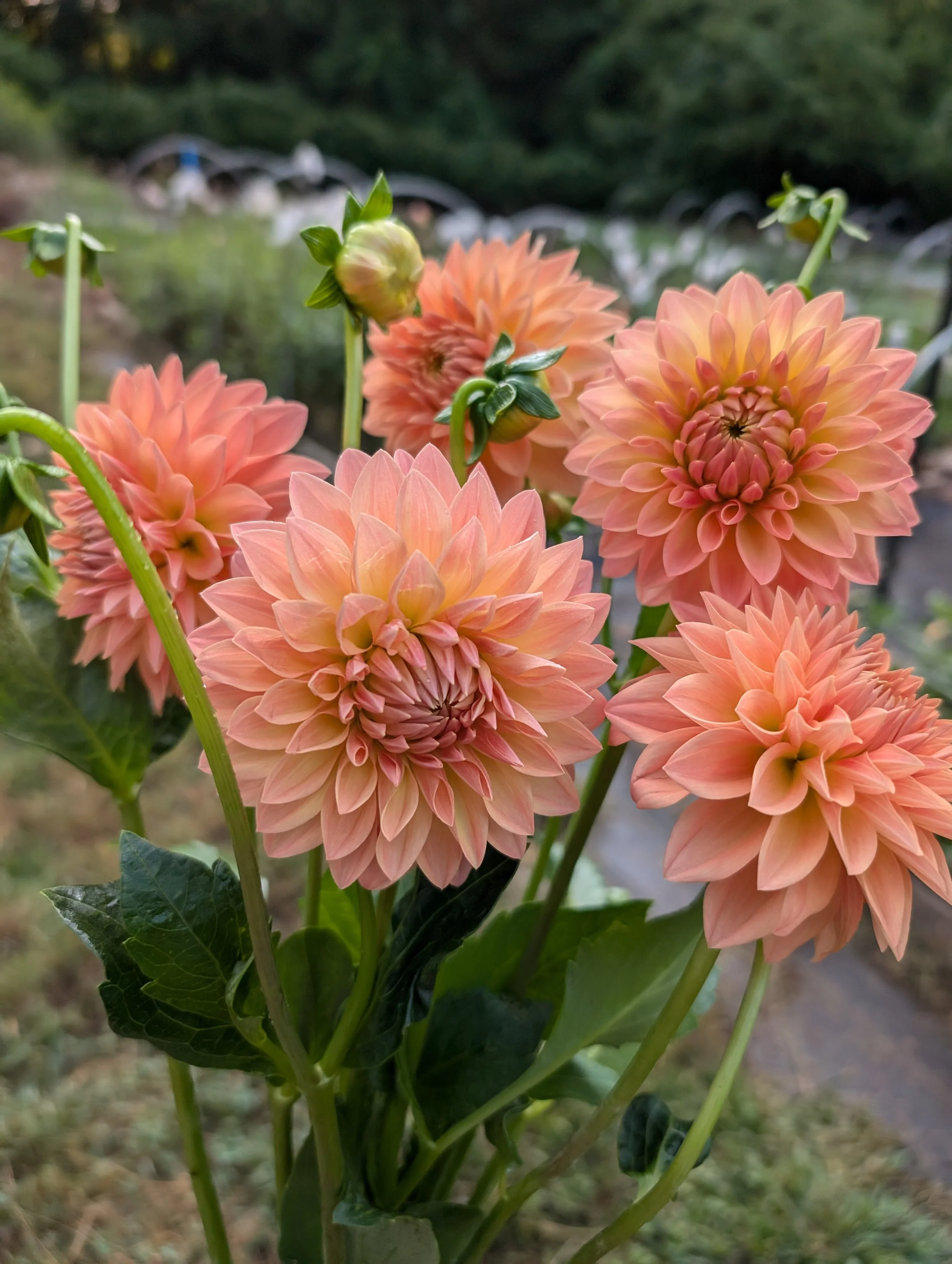
Now, you may be thinking: “What does that mean on a practical level?”
For us, it means potting up some of our dahlia cuttings to a larger size since they are going to have to wait to be planted. Making sure all our tubers are eyed up with sprouts. Getting all our irrigation and support systems prepped ahead of time.
We are also preparing beds for high heat planting. We’ve had very little rain this Spring so dry and hot has been the name of the game. High heat planting is a little different. For example, when we plant tubers in high heat - over 85 degrees with no rain in sight- we soak the bed down after planting. This goes against the conventional recommendations for planting dahlias but we find that water helps cool the soil. We aren’t watering the bed everyday but maybe twice a week if we have no rain and our temps are getting over 90. This keeps our tubers from cooking in the dirt.
We are also hand watering our rooted cuttings after planting and every day for 2 weeks after. This ensures they get a good start. Yes, we have irrigation on the beds but their roots don’t reach out to where the water is until they’ve settled in so hand watering ensures the cuttings begin pushing roots into the surrounding soil.
I’ve been sitting on the sidelines during this planting season but it’s given me a new perspective. Not being able to move compost or bend down and plant (due to my sprained knee and ankle) has allowed me to see the bigger picture. It’s given me time to think through our processes. Usually I would just get out there and drive it hard to get everything in the ground. But what I’m seeing is that taking the time to slow down and evaluate is giving me much higher success rates— Who knew, right?
But I know there are some of you like me, who just bulldoze our way through life sometimes. So take a beat, step back, evaluate what’s really working. I promise it’s worth it and this fall the rewards will come back over and over and over again!
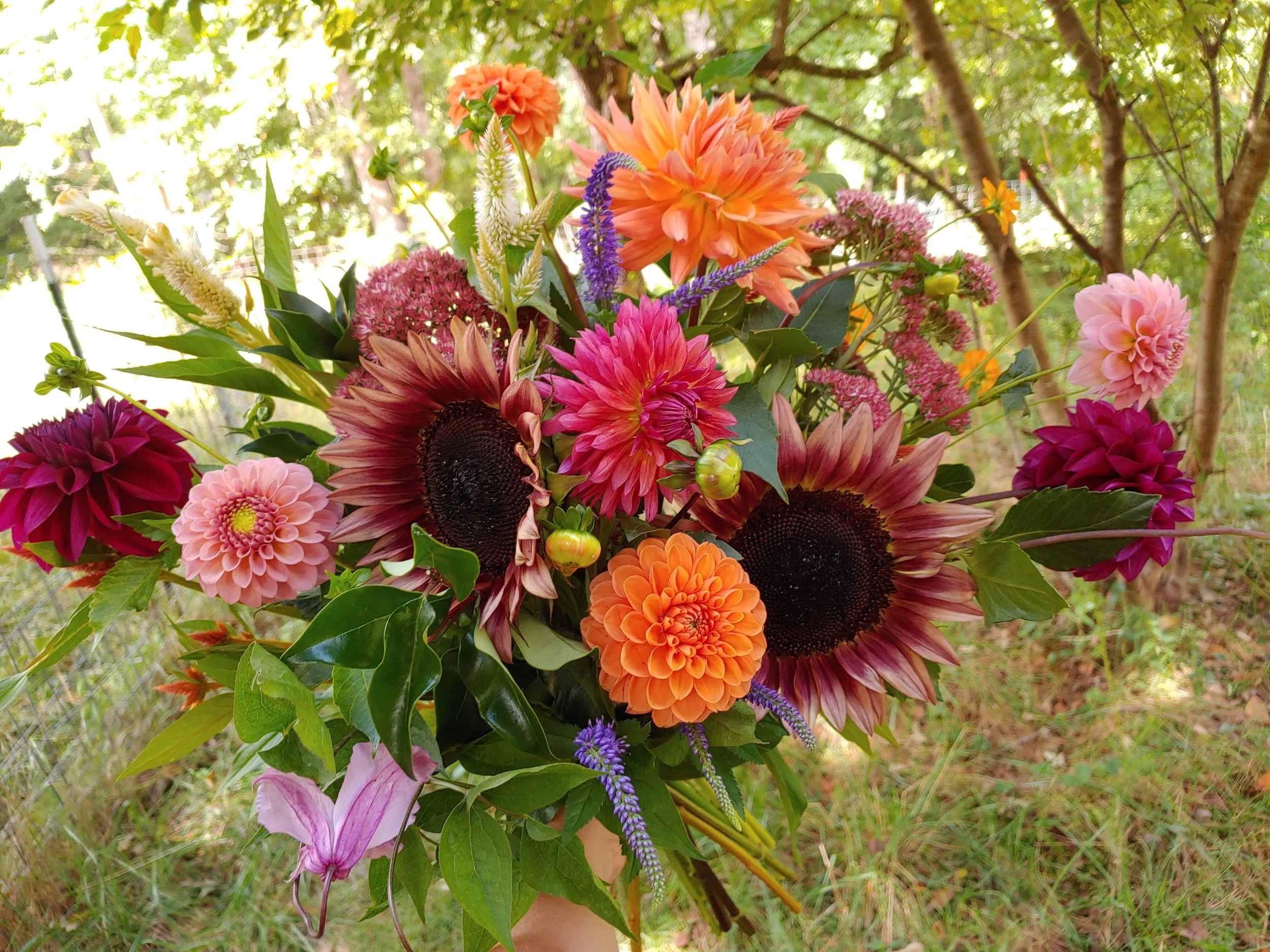
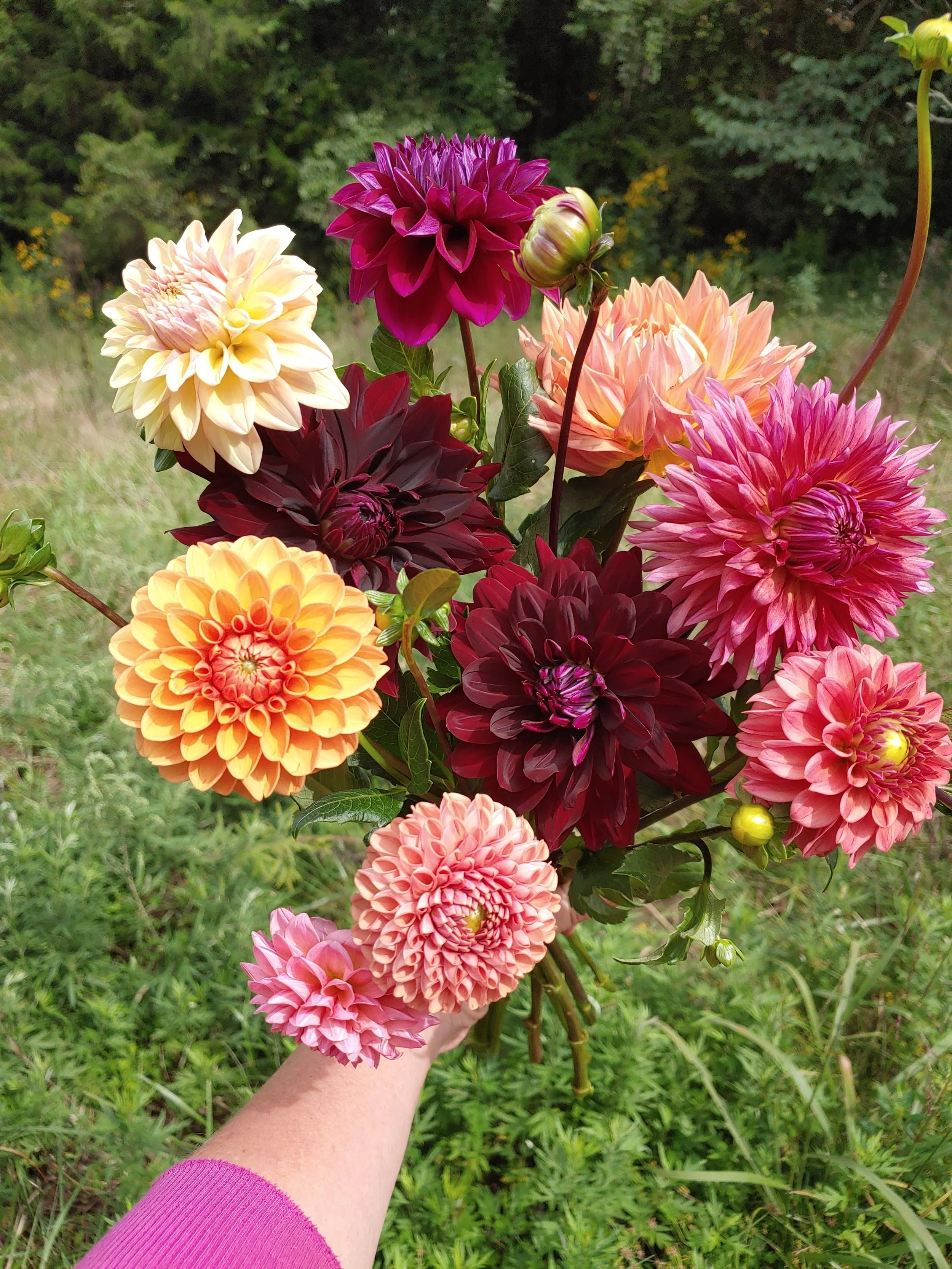
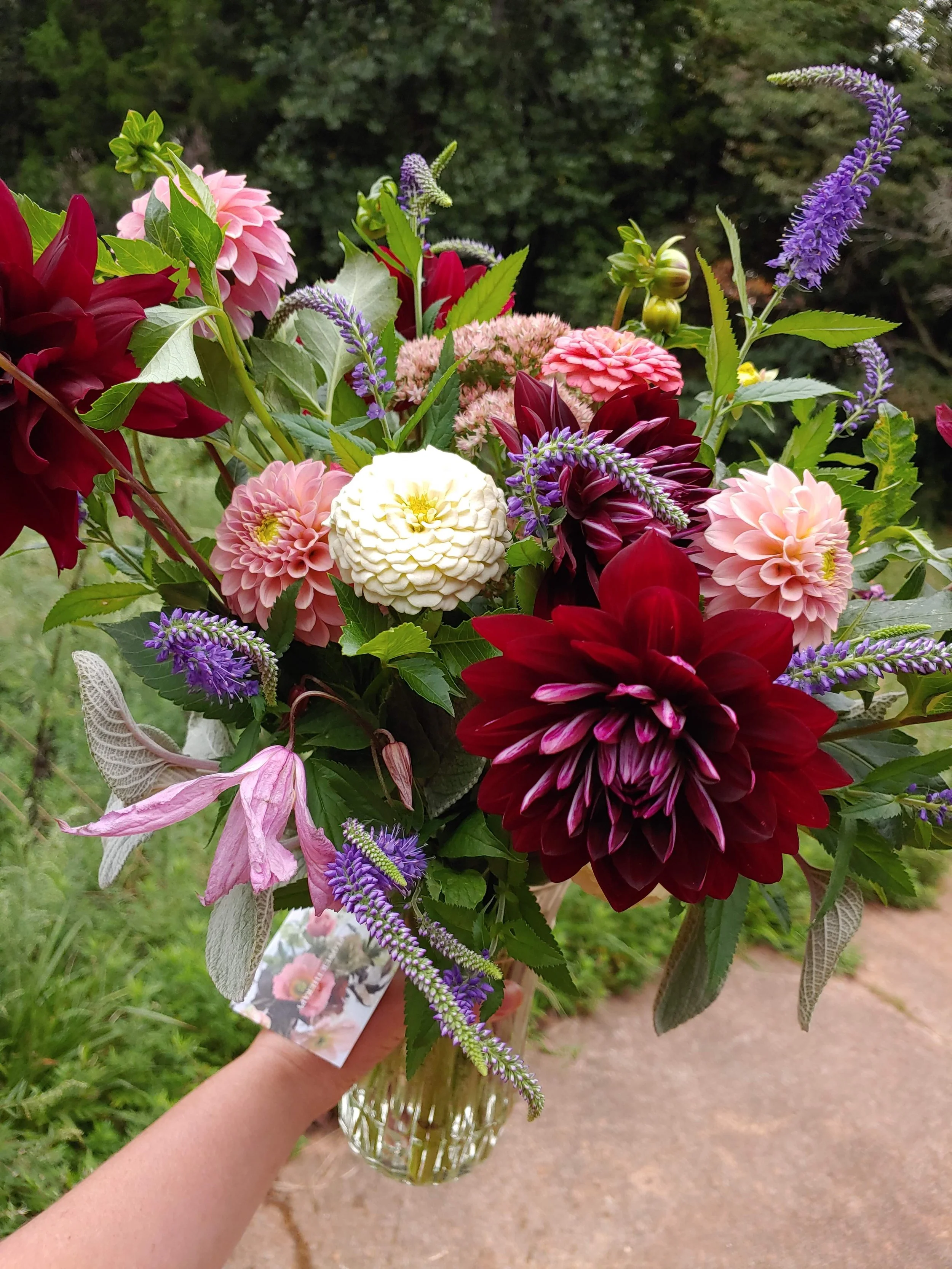
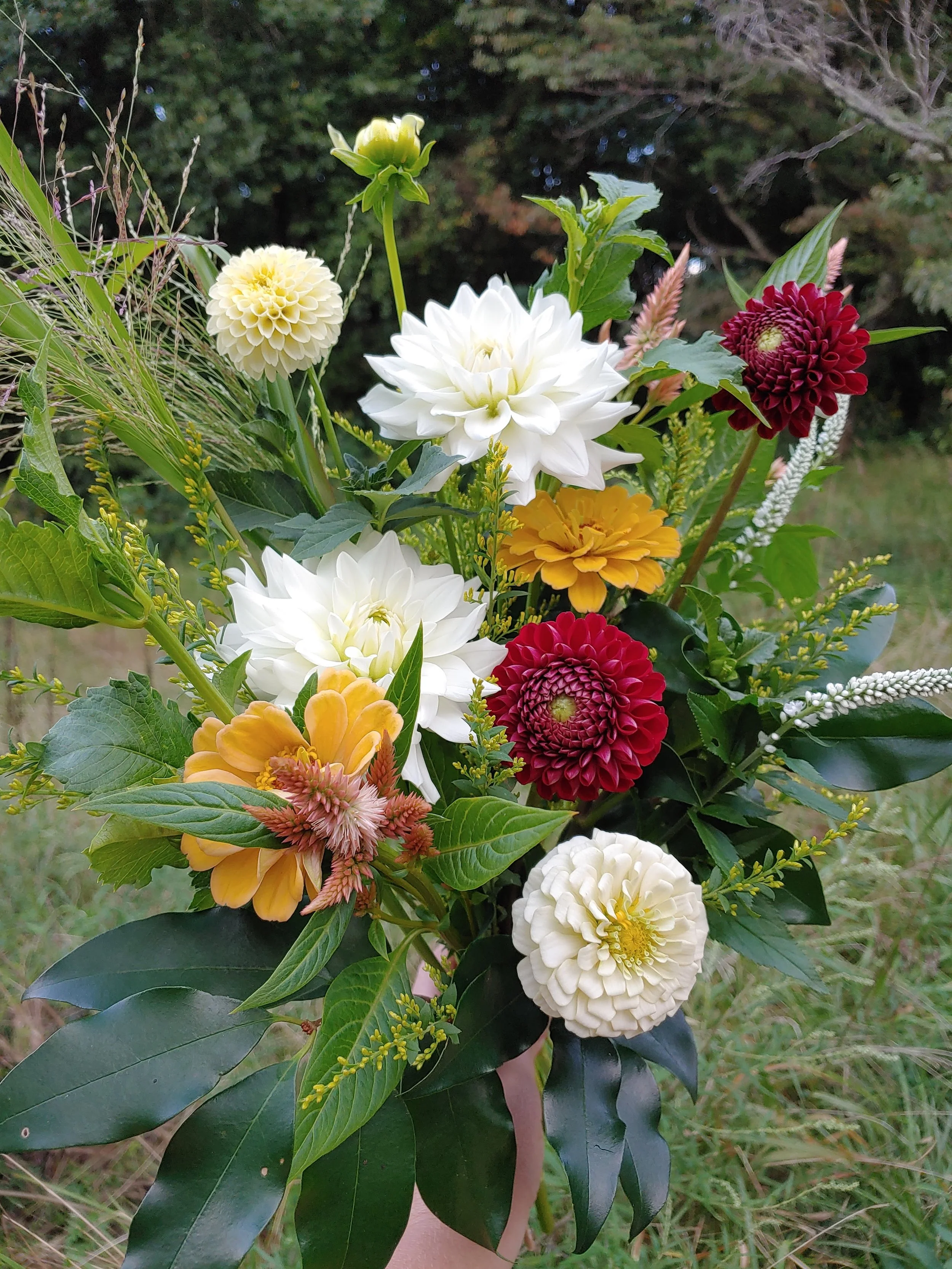
Mulch Alternatives- for beauty and the bees!
It’s always the edges- this is where the weeds seem the worst and the most annoying! A weed growing among my dahlias doesn’t bother me as much as the ones that grow along the edges. So last year I decided to do something about it.
Now you can always just put down some mulch- chips or straw or even run a bit of landscape fabric closer to your plants. But I saw a greater opportunity here! I began to side plant my dahlia rows. Now that we are perennializing some of our varieties, I figured it wouldn’t be a big deal if we had plants running down the sides.
So here’s what I’ve tried so far- the good, the bad, the ugly (well none of it’s ugly but some just didn’t work!)
Let’s start with what I wouldn’t do again: Spreading herbs- Oregano!
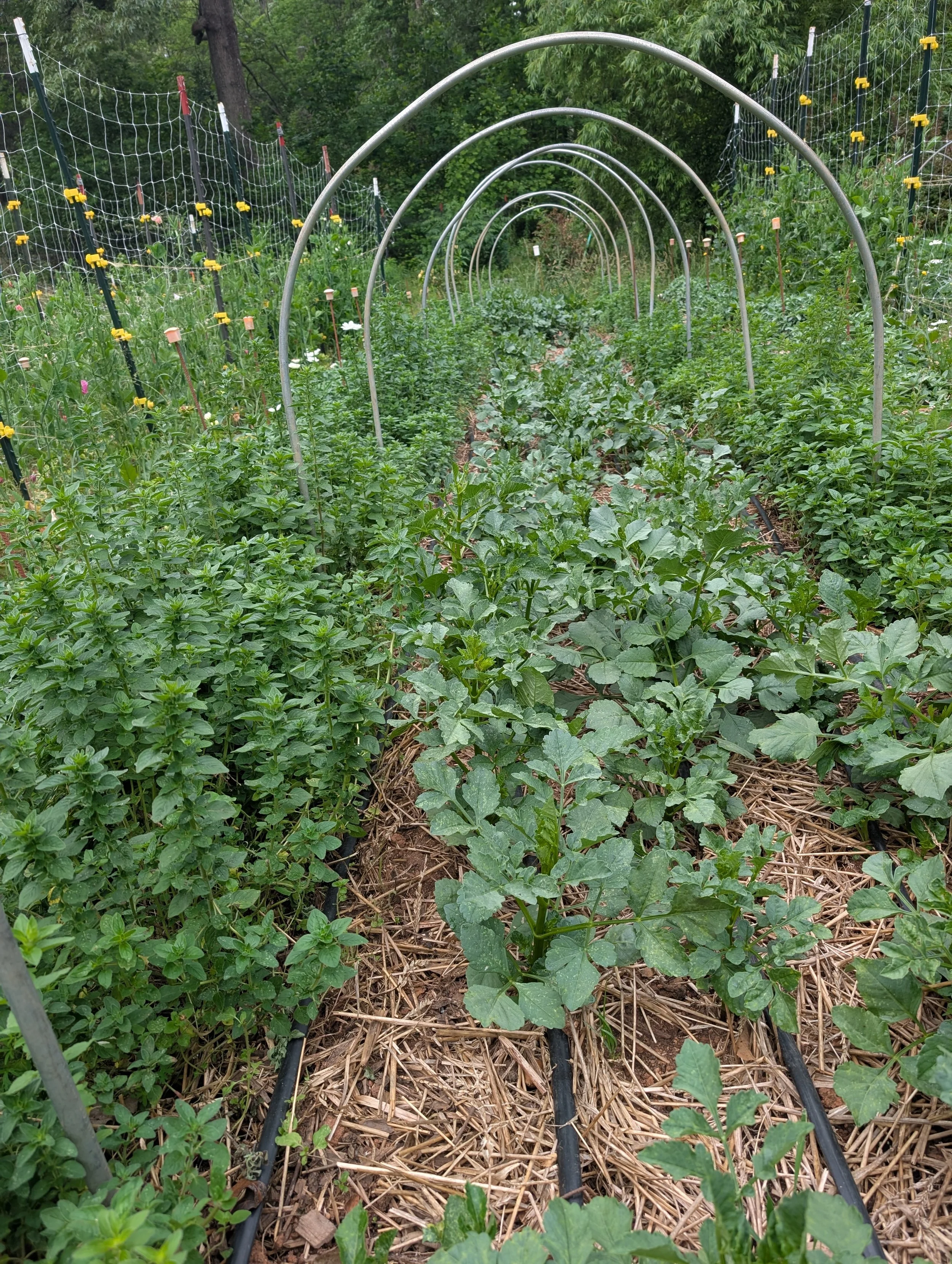
Purple Flowering Oregano side planted alongside some Marionberry Milkshake Dahlias
Flowering oreganos are a great plant to have in your garden and I highly recommend them- just don’t side plant them alongside your dahlias b/c they are more vigorous than the dahlias! The oregano was planted last spring and the dahlias about 1.5 months ago. Once the dahlias get bigger, they’ll compete better but this picture was taken after we whacked the oregano back b/c it was encroaching on the plants and starting to swamp them. I’ll give this oregano one more year after this one b/c those dahlias will be on second year growth— therefore faster and bigger plants. But I wouldn’t do this combo again and don’t recommend it.
I also tried nepeta last year- Walker’s Low to be exact. Great plant— just don’t put it near your dahlias. It spreads and also flops over the dahlias when they are small. But the worst part: it attracts spider mites!! I had one of the worst infestations I’ve ever seen on the dahlias in that row. So we dug all the nepeta out this winter and moved it far away!!
Ok— So what’s working so far! Sedum- I have 5 beds that are side planted with sedums. This is the second year and the plants are getting bigger but I feel like we are still good space wise. Sedums spread a little but not aggressively. They also hold themselves up well without additional support— I think this is important.
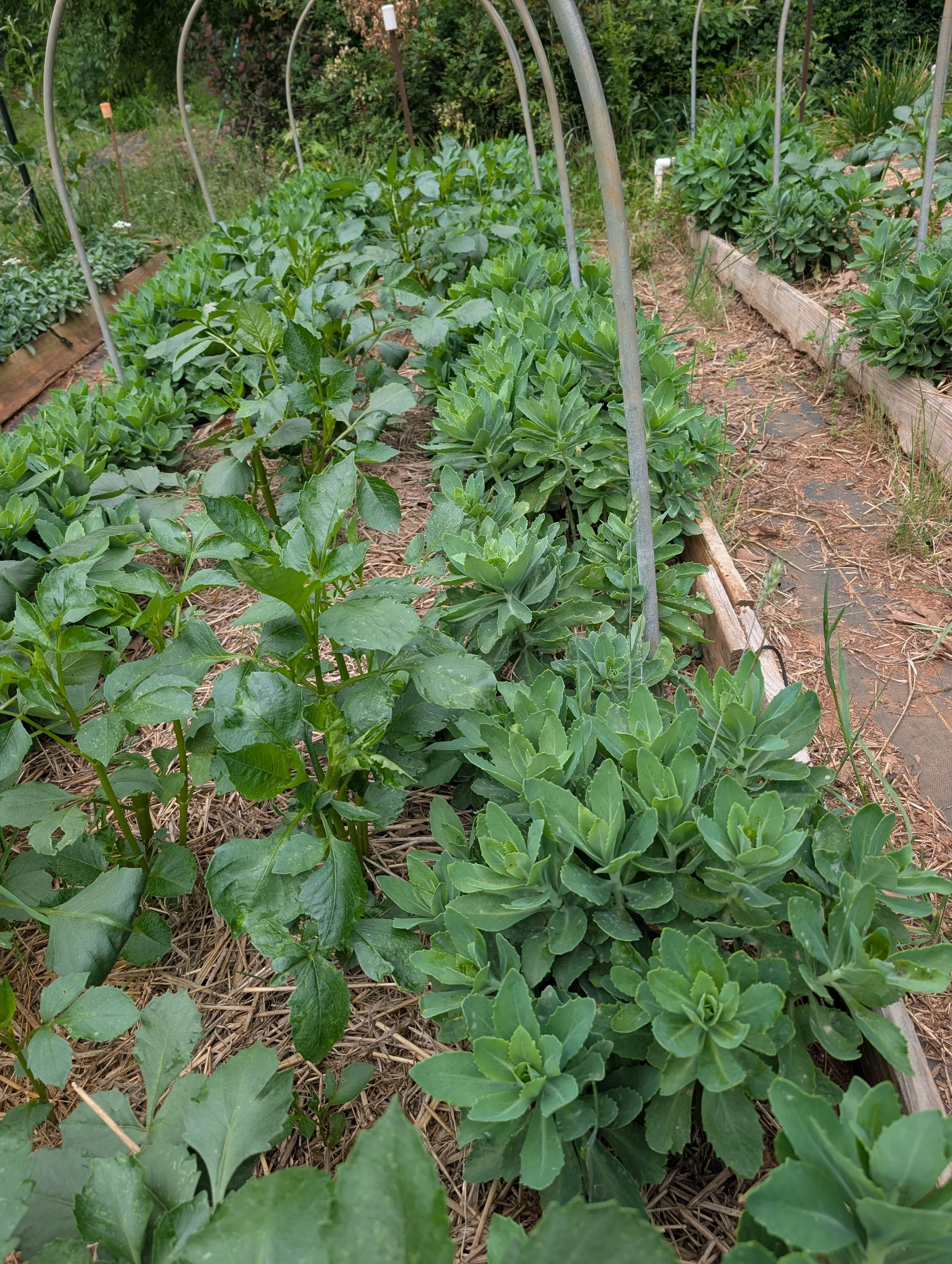
Autumn Fire Sedum side planted along Peaches N Cream Dahlias
I do think the variety of dahlia plays a role too— I tried to match my side plant to the size of my dahlia. I don’t think I’d try this with Cafes- those plants are monsters. But Peaches N Cream is not a massive dahlia so this works well.
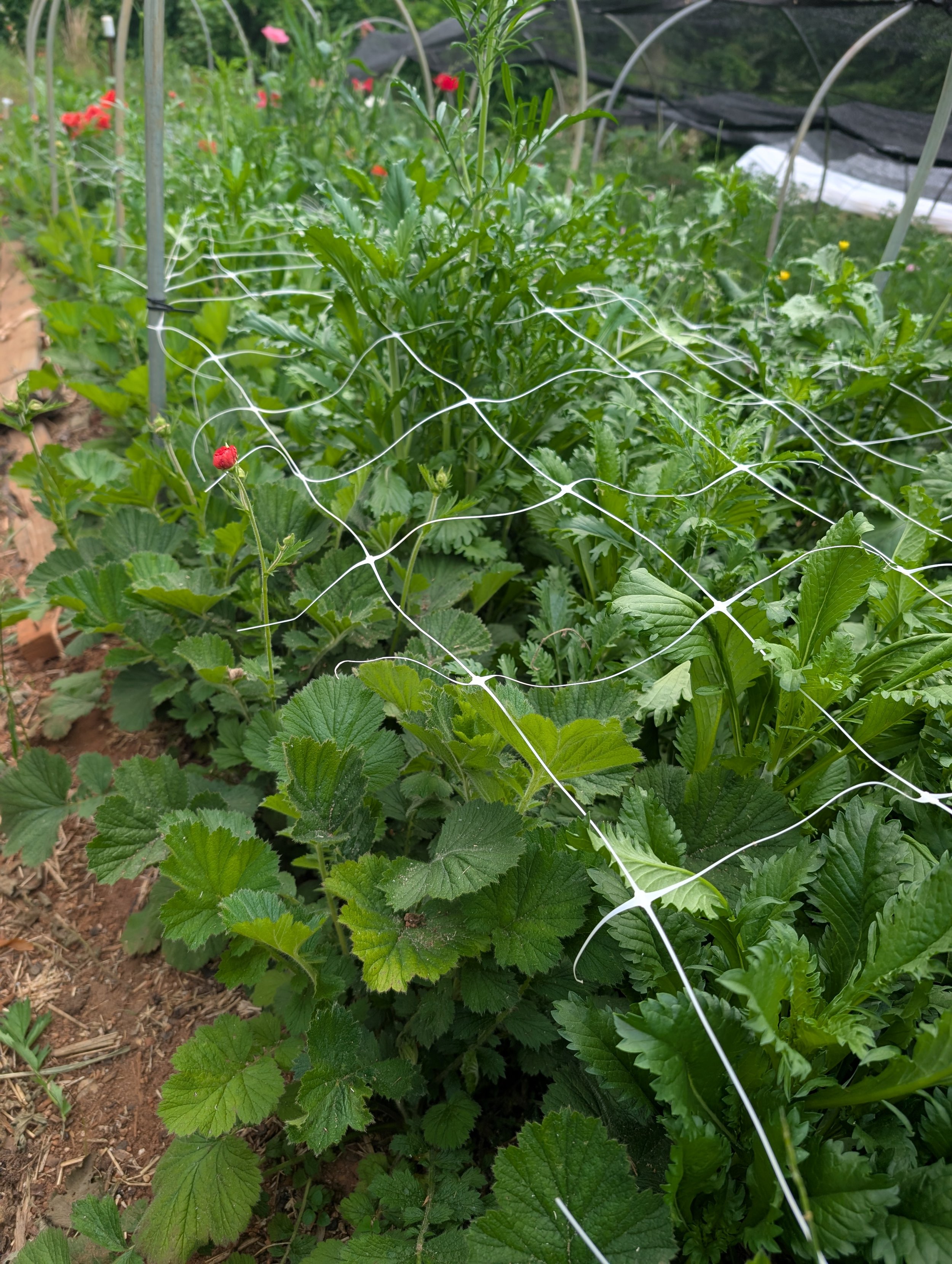
Geum side planted along side scabiosa
This is geum planted along side annual scabiosa right now but that will be switched out for dahlias once it flowers. Geum is an easily grown from seed perennial. Flowers in April/May- I also think flowering time is important. I prefer things that flower before the dahlias I think I’ve decided. (Sedums excepted). These plants will spread a little but shouldn’t get too unruly and I think will actually appreciate the little bit of shade from the dahlia foliage during the hot summer. I have to admit- I think geum plants are really beautiful- they have a gorgeous leaf shape!
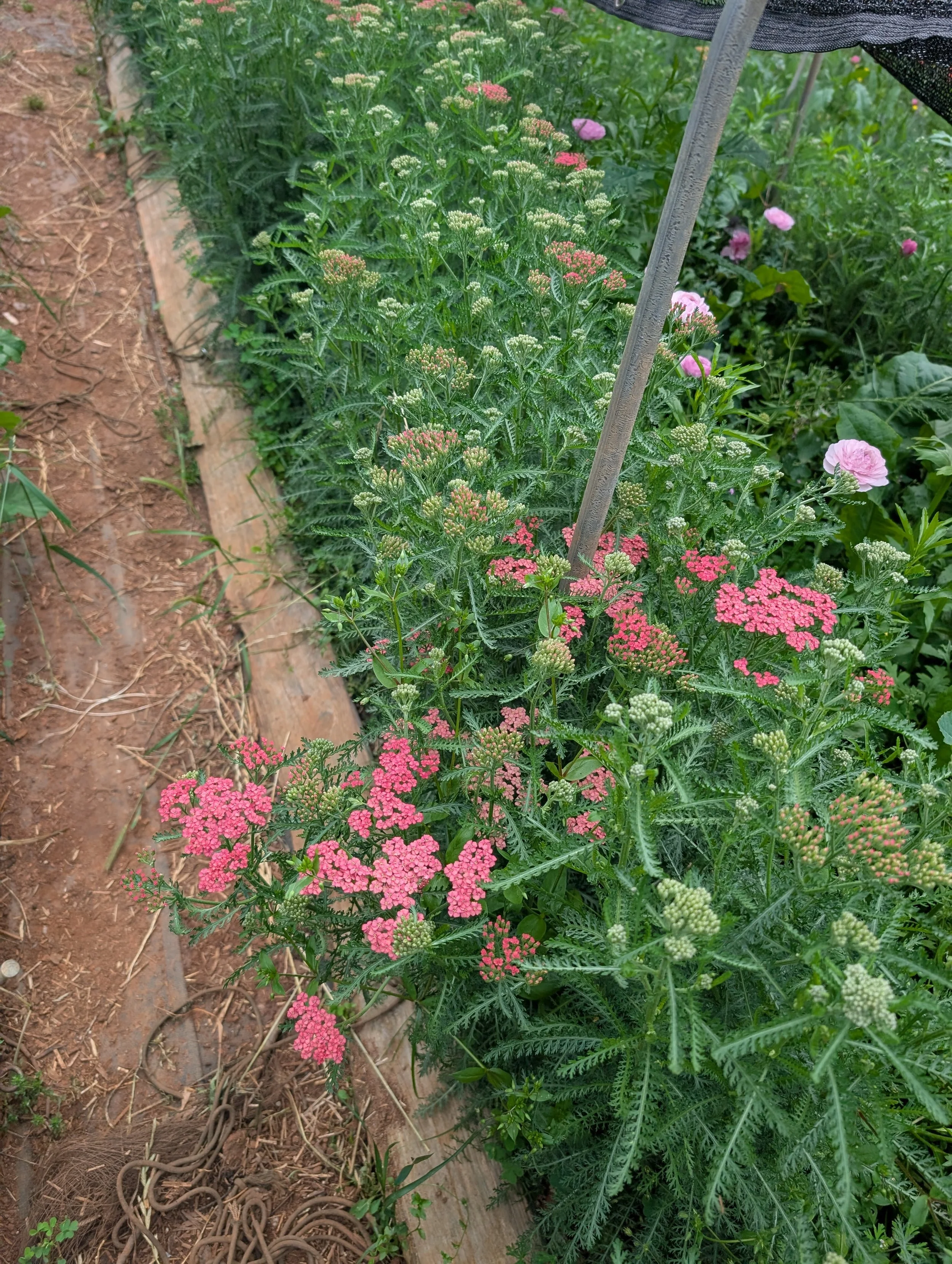
Yarrow side planted along ranunculus
I’ve got two beds with yarrow along the edges. Currently we have the remains of our late ranunculus crop in there but they’ll be switched out soon for dahlias. I really think this combo is going to work well. I’ve been observing the growth rate of the overwintered dahlias and they should grow fast enough to support the yarrow. The yarrow should flower and then be followed very closely by the dahlias. The yarrow forms a nice mat of green foliage during the winter to keep weeds down. I have a feeling this might be one of the best combos yet.
I’ve got some salvia coming to try on another row this year. What are your thoughts? Have you ever side planted anything to keep down weeds? I’d love to hear of any perennials you think would work well!
Early Season Pest Control
I don’t want to think about it but my dahlias are telling me I must. As I inspected our overwintered dahlias this week, I began to see it— Thrip Damage!! UGH!
But with temps in the high 80’s multiple times since early March, I shouldn’t be surprised. But I have to admit that I’m still wrapping my mind around having to worry about dahlia pests this early in the season. So if you are there too— you aren’t alone!
Well, what to be done about it?? Here’s how I am approaching it.
Number one- identify your pest. You have to know what you are fighting first. We’ve got thrip damage as the major pest right now. We also have a little bit of slug damage on emerging shoots and some our potted up cuttings in the hoop house.
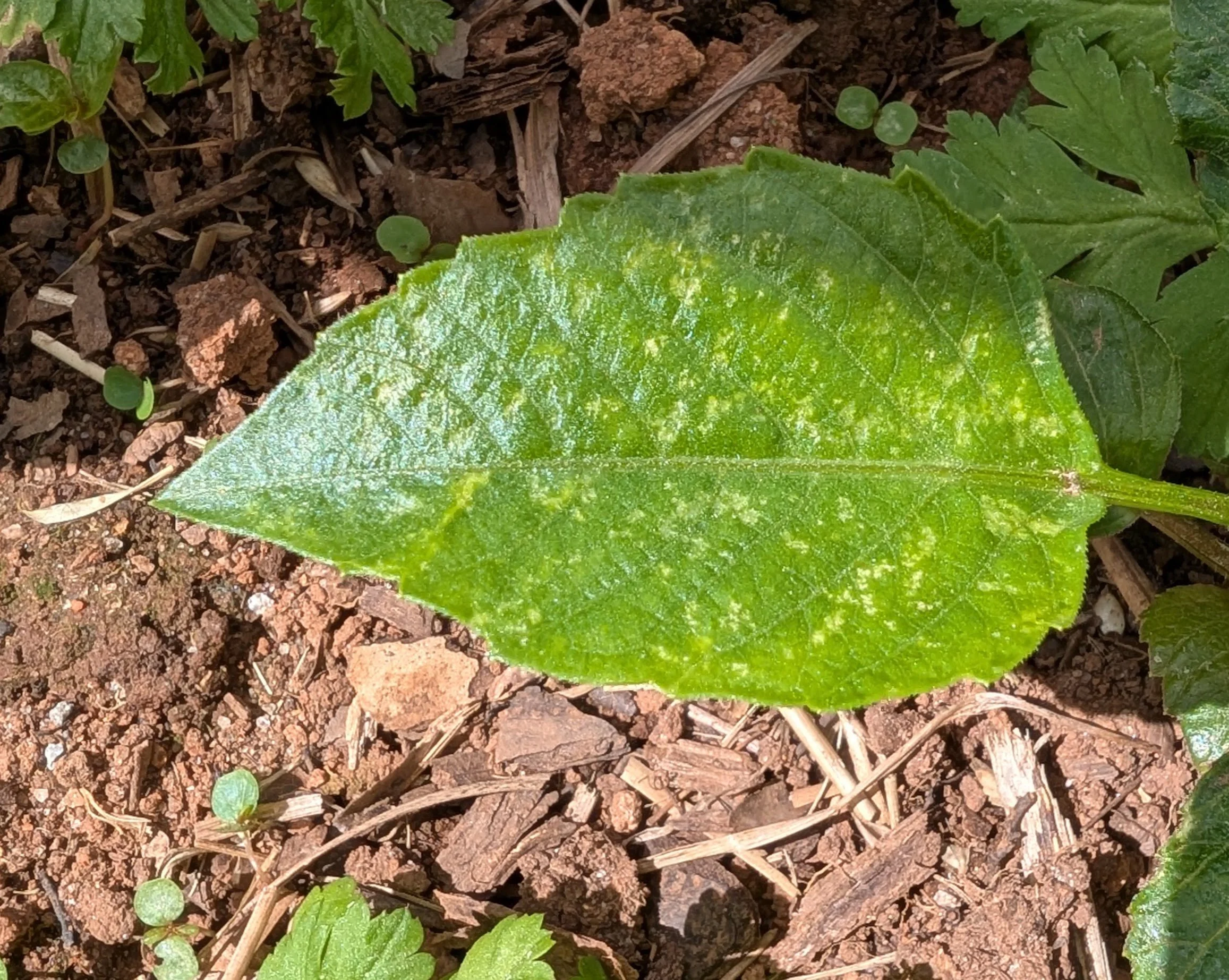
Current Level of Thrip Damage
I mentioned earlier this year that I wanted to have a better pest control program this year. I wanted to be more pro-active than reactive. So since we are already seeing problems- it’s time to get on it. I did some research on different pest control products. One of my favorite places to start this process is the Arbico Organics site. They have a very wide selection of products (a lot of OMRI - organic- listed stuff too!) They also have articles on different pests and the products you can use to control them. Then I begin searching other sources on the internet - a quick google usually returns some good results. I tend to look for research papers, industry articles- those types of science/experience based information. I don’t usually find information of any use on lifestyle blogs/magazine publications- these unfortunately come up higher in the search results so sometimes you have to scroll down.
My go to pest control for many years has been a spinosad based spray. The Capt’n Jacks Dead Brew Bug is a popular option for this. You’ve no doubt heard me recommend it and I still use it. It’s still in my rotation. But you need more than one thing. You want to rotate and not spray the same thing every time. You can end up building up a resistance if you always spray the same thing.
After researching I settled on 2 new products to try. BioCeres WP and NoFly WP. (WP just stands for “wettable powder”) Why did I choose these? Few reasons: They both target multiple pests. The main pests I’m concerned with for my dahlias are thrips and spider mites- they both control thrips and NoFly does spider mites as well. They are also affordable. If you’ve looked into multiple pest control options, you’ve no doubt seen that some things can be expensive. Neither of them are knock down sprays so you have to wait several days to see the effect. They both work from the inside out on an insect which means they take time. The BioCeres takes the most time and is best used as a preventative or when pest levels are low to prevent further pest outbreak.
We will begin trying these in our rotation over the next few weeks so I will let you know how it goes.
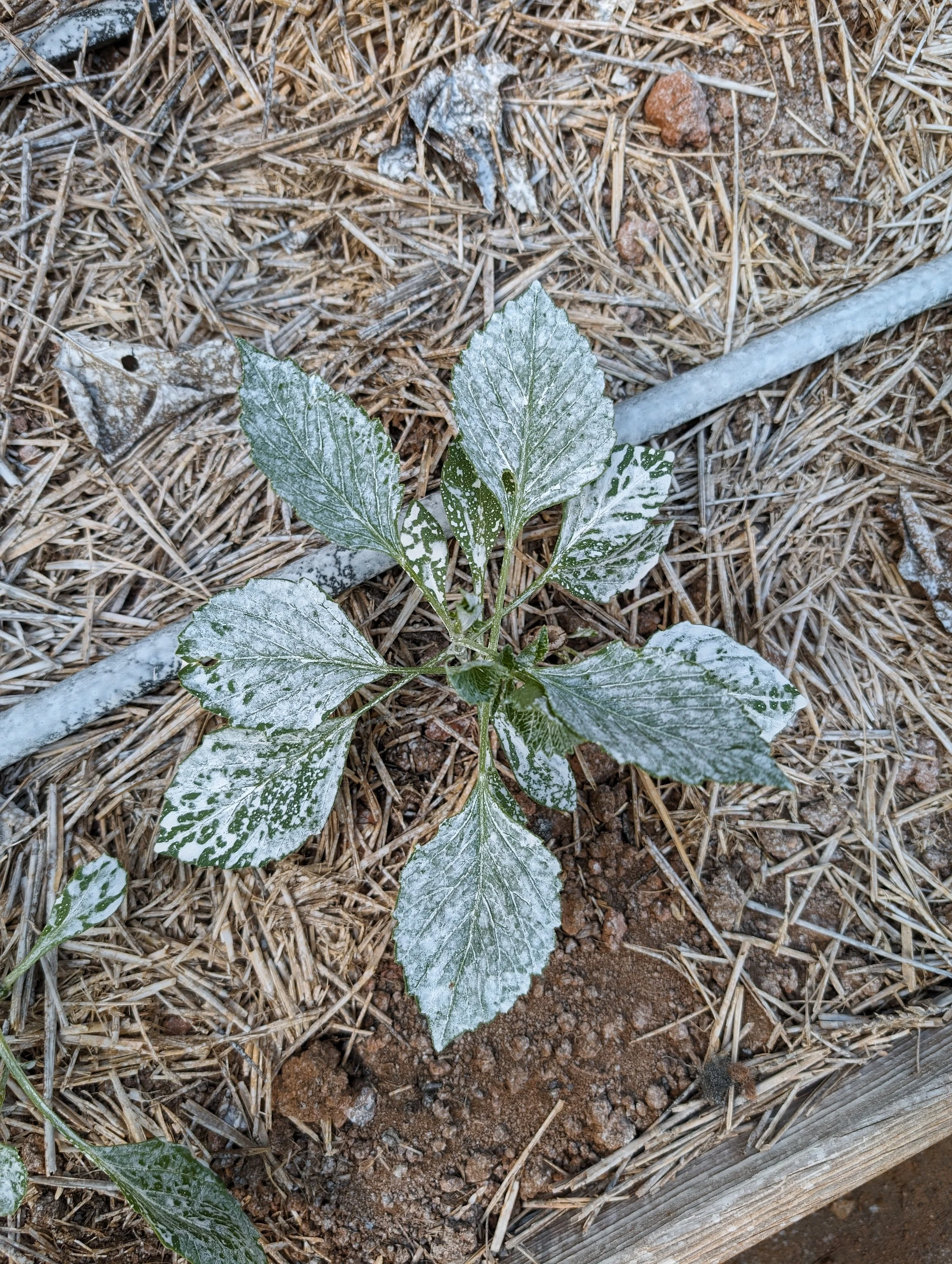
My other favorite method to use really early on in the season is to spray with Surround WP. If you are growing commercially, this is a really good option. If you are growing for beauty and pleasure in your backyard, then this may not work for you. Your plants will be a slightly whiter shade of green for the rest of the season but it’s a great method of early season pest control. It has so many benefits: cools your plants, helps to keep powdery mildew away, keeps pests levels down. It’s a really good all in one option if it works for your growing situation. You can read more about it here in this blog post.
So whether you are ready or not, the pests have come to play early this year. Time to get your game face on!
All the Resources You Need for a Successful Dahlia Season
Waking Up Tubers- How to get those tubers ready to plant
Planting Rooted Cuttings: The details you need to successfully plant rooted cuttings
Planting Tubers: It’s easy but here’s what you need to do it right!
Supporting: The 2 biggest mistakes new growers make and From Tuber to Bloom
Fertilizing: Dahlia Game Plan: Getting Organized- Fertilization and From Tuber to Bloom
Watering: Are Your Dahlias Thirsty
High Heat Specific Tips: Growing Dahlias in High Heat and Dahlias are a Process and
Your Dahlias Need a Therapist
Can’t find your answer? Send me a question here.
Burn Baby Burn!
Now that I have you singing the song (Disco Inferno by the Trammps), let me explain why burning has been the name of the game recently.
We have to jump back to Fall of 2025- it's frosted and the dahlias are ready to be cut back. We’ve made our decisions on which varieties will be dug and which will be overwintered. I’m always on a quest to reduce the amount of plastic we use on this farm so I thought- let’s try using straw to cover the beds and keep the weeds down this year instead of landscape fabrice/black plastic — we’ve used a combination of both in the past.
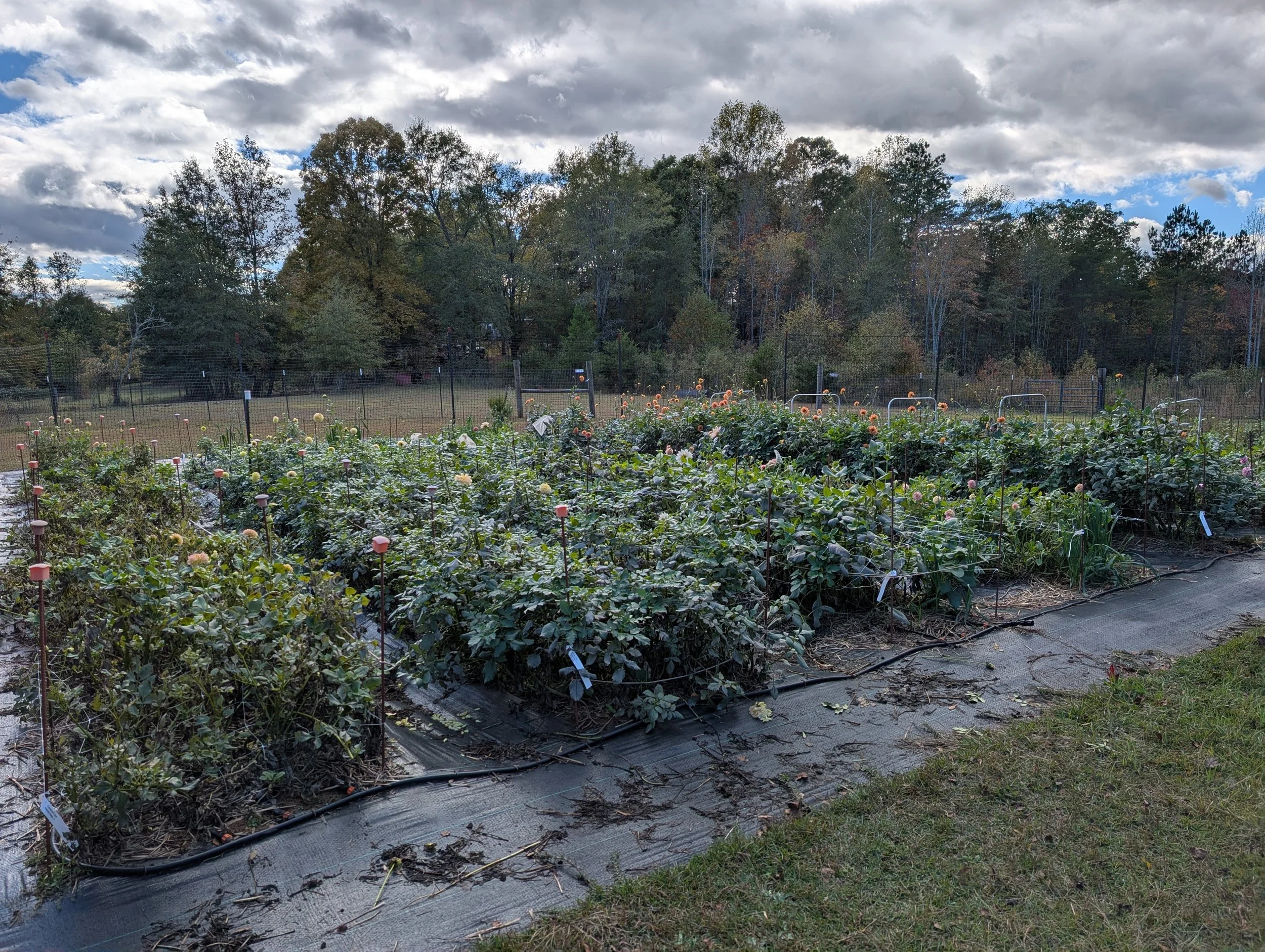
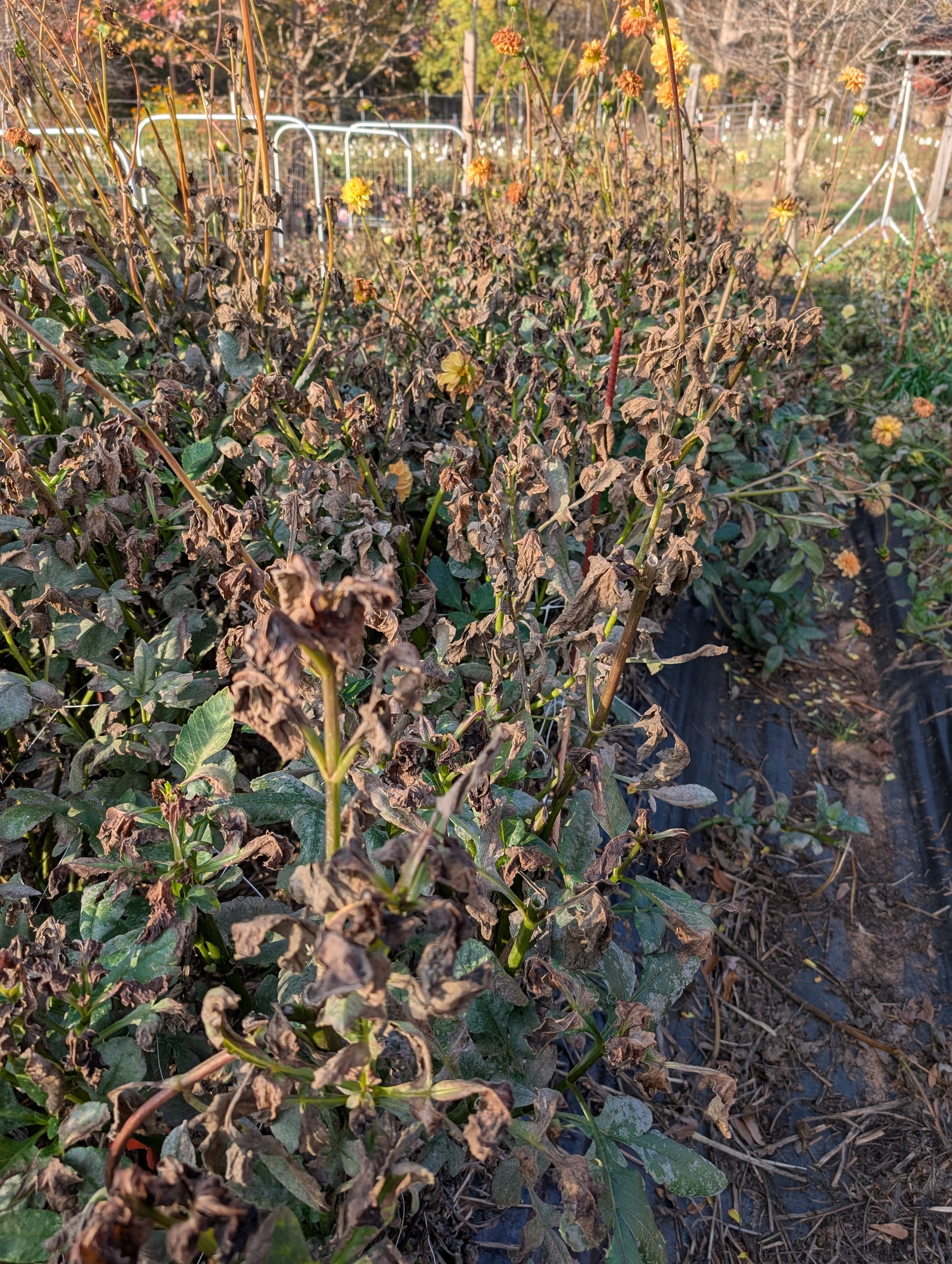
We cut down the overwintered rows, pulled any remaining weeds and covered in straw with such high hopes we were doing a good thing. Time progressed and around mid December I began noticing some grassy shoots in our rows and by early January the weed pressure was too much. So out came the landscape fabric and we stapled it down over the rows.
One of my dreaded fears had finally come true- we got the bad batch of straw that had too much seed in it. It’s always a risk but for years we’ve been successful. I wasn’t too worried though because I knew we still had 2 months until our dahlias would begin to sprout - plenty of time to kill off the weeds.
Enter the winter storm at the end of January- over 10 days under snow and ice. Very unusual for our climate to be that cold for that long. Then the recovery and clean up process that happens after a big storm and all the regular chaos of a farm in February (it’s surprisingly busy!)
And we come to early March…….
I knew it was time to remove the covers- we had 2 weeks of 60+ degree temps at the end of February. That’ll get those dahlias sprouting!
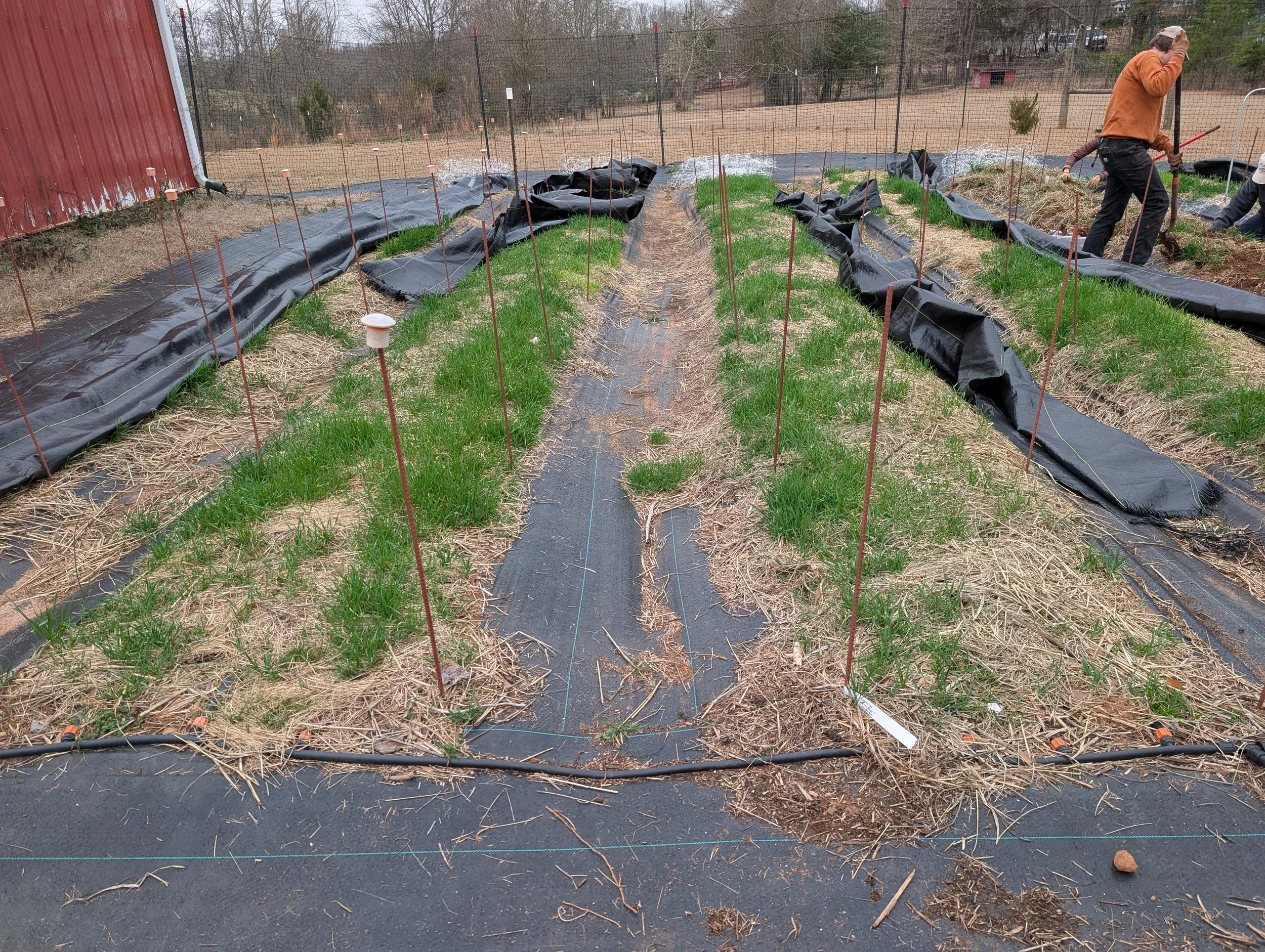
We arrived at our offsite plot to this view! Majority of our covers blown off and a very healthy crop of weeds growing! Now, I’ll admit- it’s my own fault. I didn’t go check like I should have in the chaos of February. We took all the covers off and because the dahlias hadn’t sprouted above ground yet, I began using a long handled propane torch to flame weed the rows.
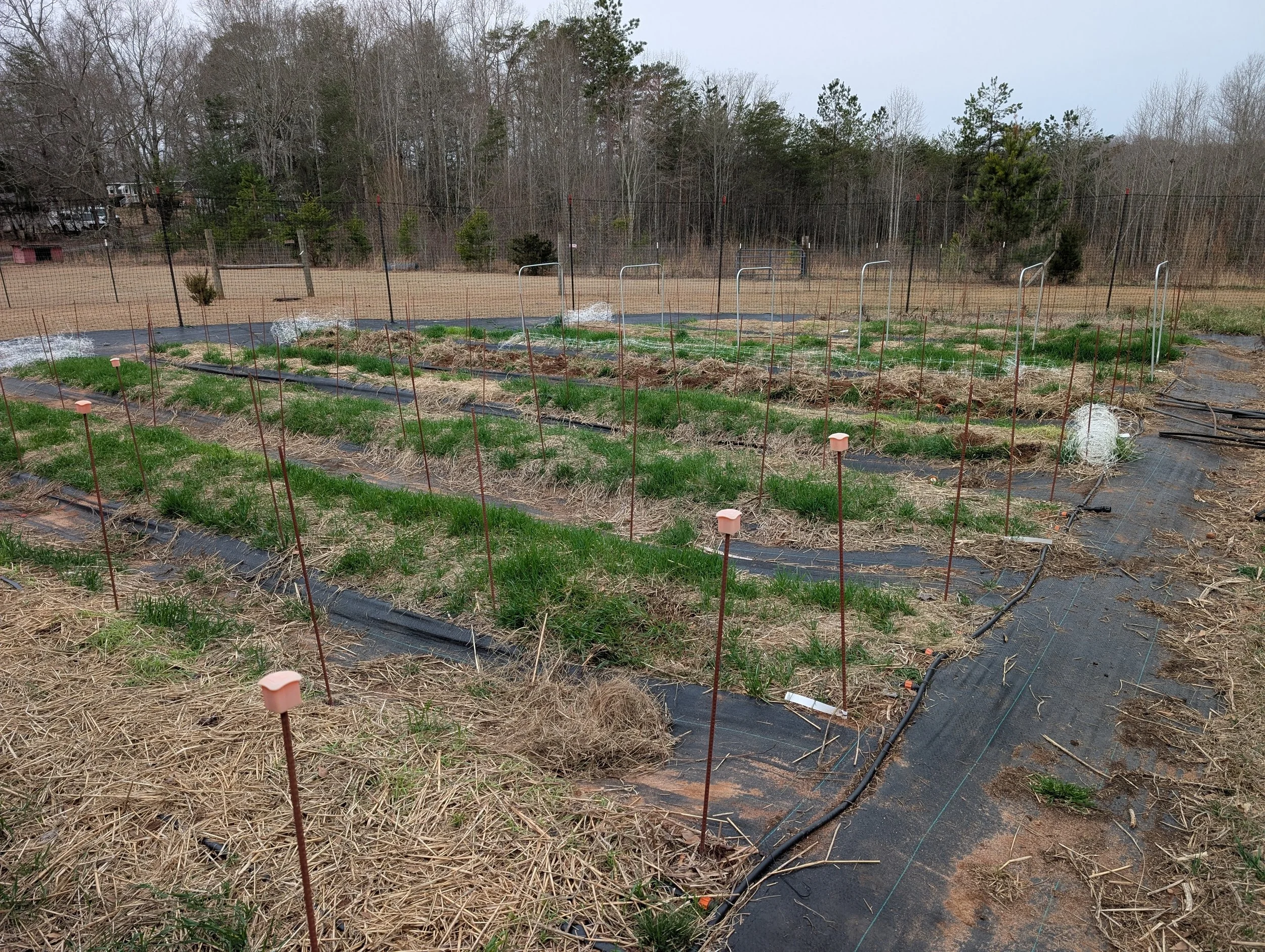
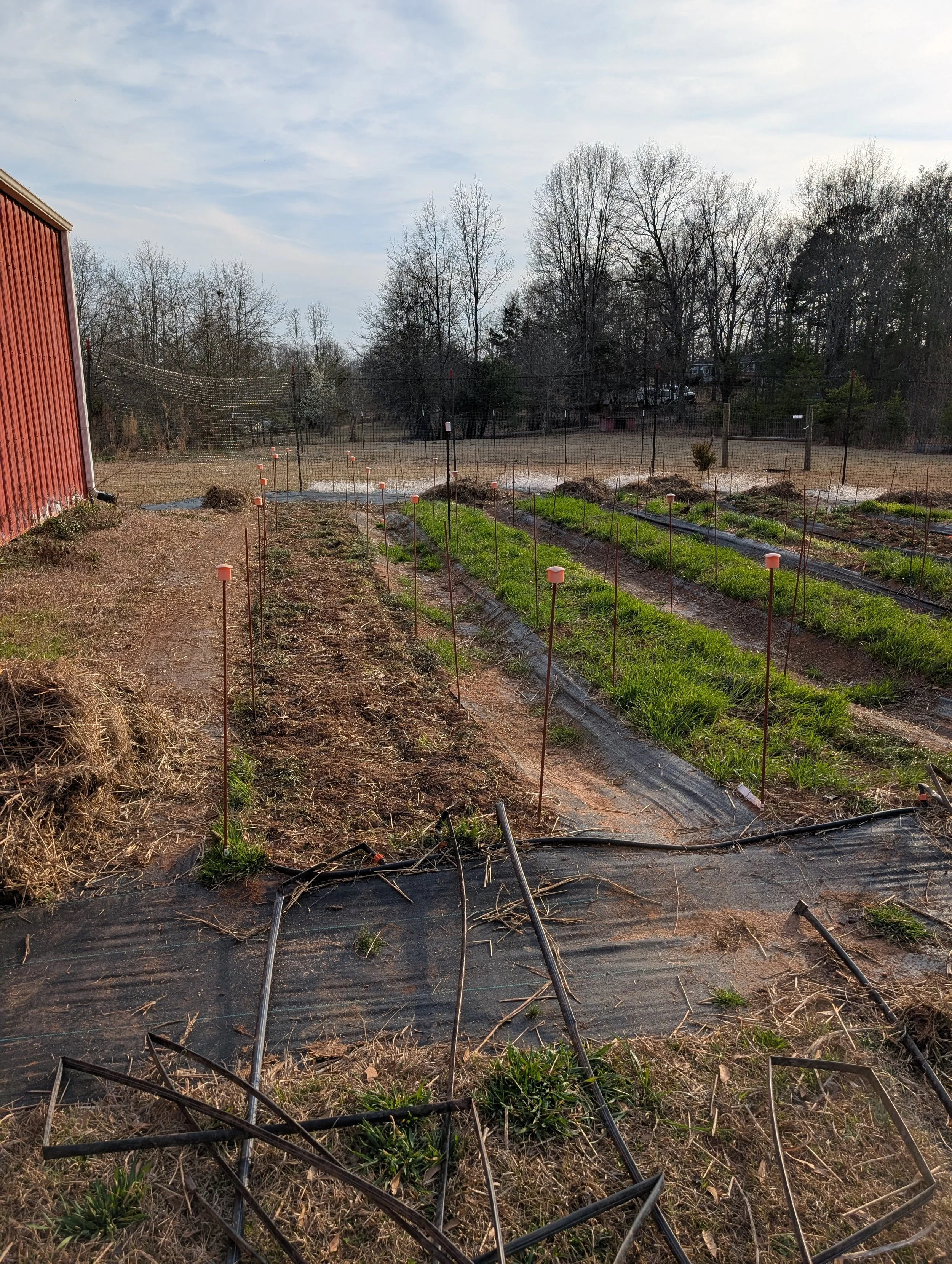
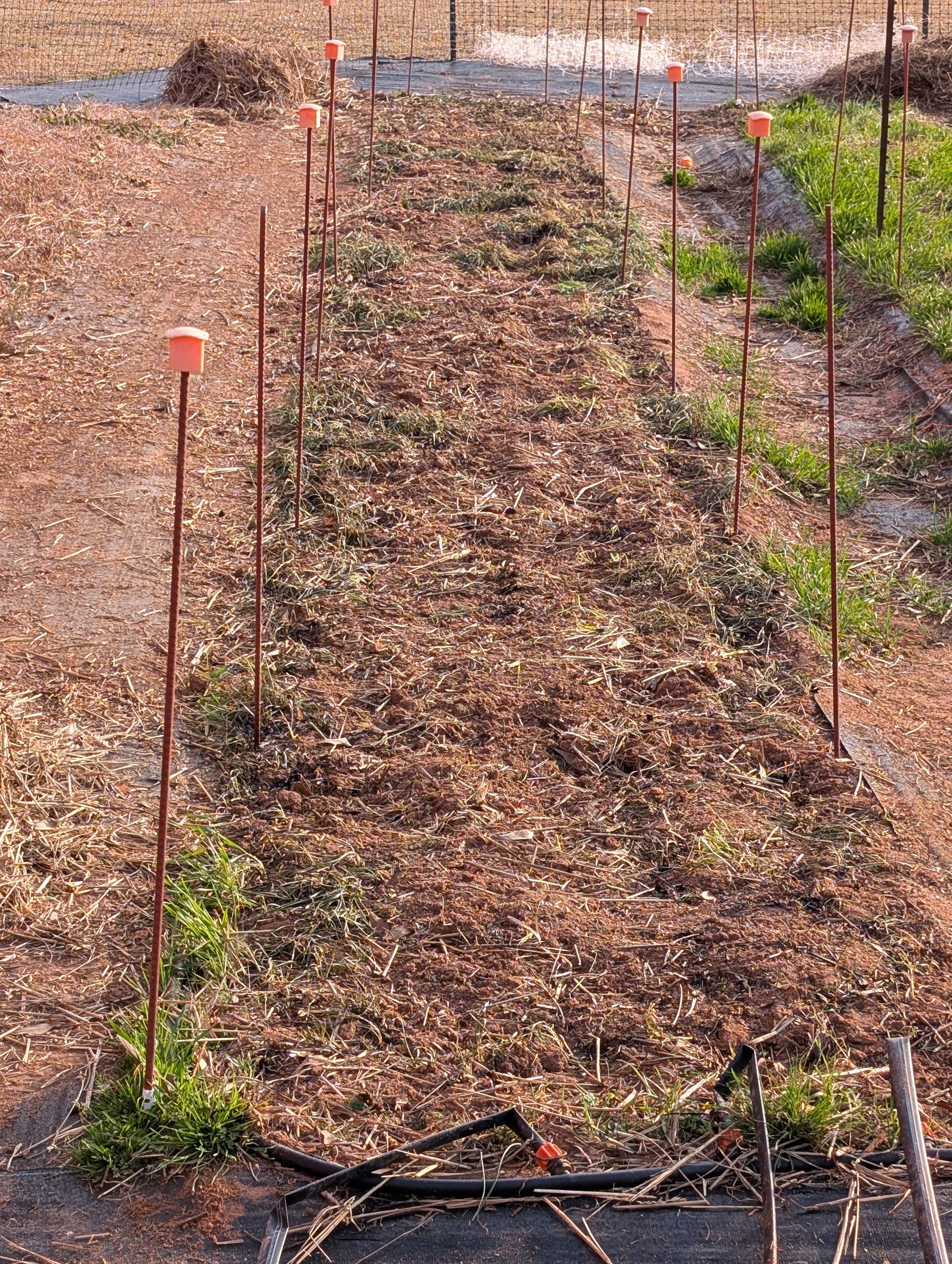
The flame weeding process works well- it’s agonizingly slow but easier on your body to stand and flame than to be bent over weeding. Thankfully this was the only field that looked this way. The other 3 fields were pretty good- 90% of the covers stayed on.
So my goal of having nice weed free rows in the spring was a huge fail but we did manage to fix it before the dahlias began growing so that’s a win— timing was everything in this situation. Next year— Back to the fabric from the beginning!
