I’ve been noticing some confusion recently about how, when and what to use if you need to spray your dahlias. So let’s see if we can clarify some things.
How do you know your dahlias need spraying? Observation is the biggest clue- this is why your morning coffee walk through your dahlias is not just for enjoying the beauty. Take some time each week to look closely at your plants- the blooms, the leaves, the stem—the whole thing! Take your camera out and snap some pictures. This is the easiest way for me to remember from week to week what I need to focus on during our spray regimen.
Once you begin to see anything besides solid green leaves, then it’s probably time to consider some form of pest control or disease control. Yes, there are other ways besides spraying but the focus of this article is spraying so I’ll keep on this route and address the others later.
What to Spray:
The most common pests seen on dahlias are thrips, spider mites, leafhoppers, broad mites, and cucumber beetles. This of course varies a little by your geographic location but unfortunately I think most of us get thrips and some form of mite. A lot of these can be controlled by the same spray. A Spinosad based spray will take care of thrips, spider mites, leaf hoppers and several other pests. Capt’n Jacks is the popular brand— but here’s where I see some of the confusion. Capt’n Jacks is a brand. They make lots of sprays. I’ve seen several people say they sprayed their pests with Capt’n Jacks Copper- this is a fungicide not a pesticide. Pesticides control bugs. Fungicides control fungal diseases. Capt’n Jacks Dead Brew Bug is the spinosad based spray that will kill spider mites, thrips and other beasties. Conserve is the commercial grade brand name if you are covering a lot of ground.
You want to alternate your sprays. Don’t use the same thing twice in a row unless you are beating back an infestation. When it comes to maintenance sprays, always alternate. Avid (or generic Fervid) are great for mite control but they also take care of thrips. Bioceres WP and Botanigard Maxx also work well as alternates. It is very important to read the label thoroughly to see if your chosen spray is actually killing what you desire.
Fungicides control fungal diseases. It’s not always possible to eradicate the disease completely but you can often keep it controlled so it doesn’t spread or take out your whole crop. Copper fungicide, Milstop (super strength baking soda) and Cease (Bacillus subtilis) are my range of products that we alternate. I prefer to stick to organic sprays as much as possible. Everything I’ve listed here is organic except the Avid/Fervid.
You are looking to control things like powdery mildew, botrytis blight and verticillium wilt when it comes to dahlia fungal diseases.
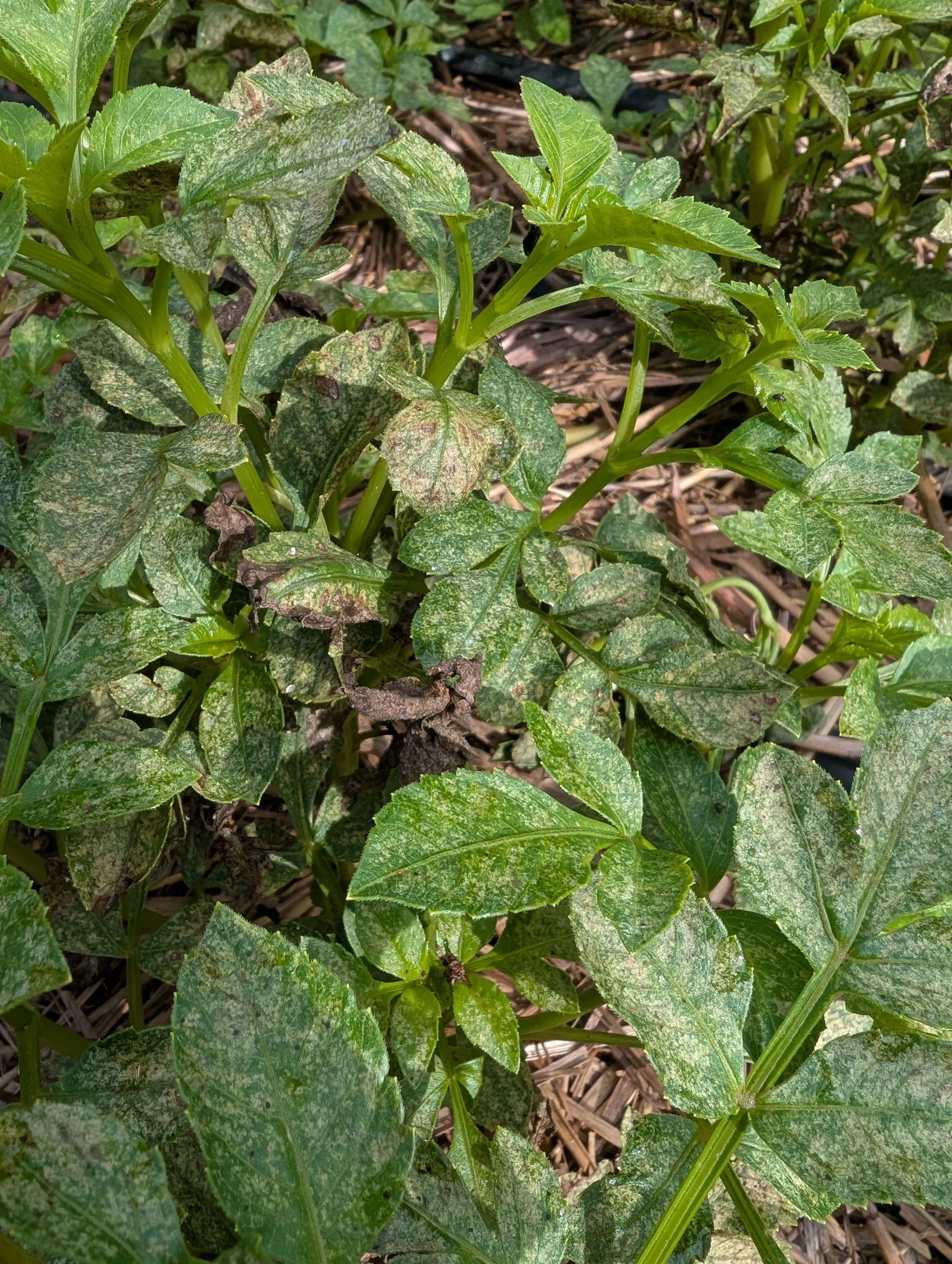
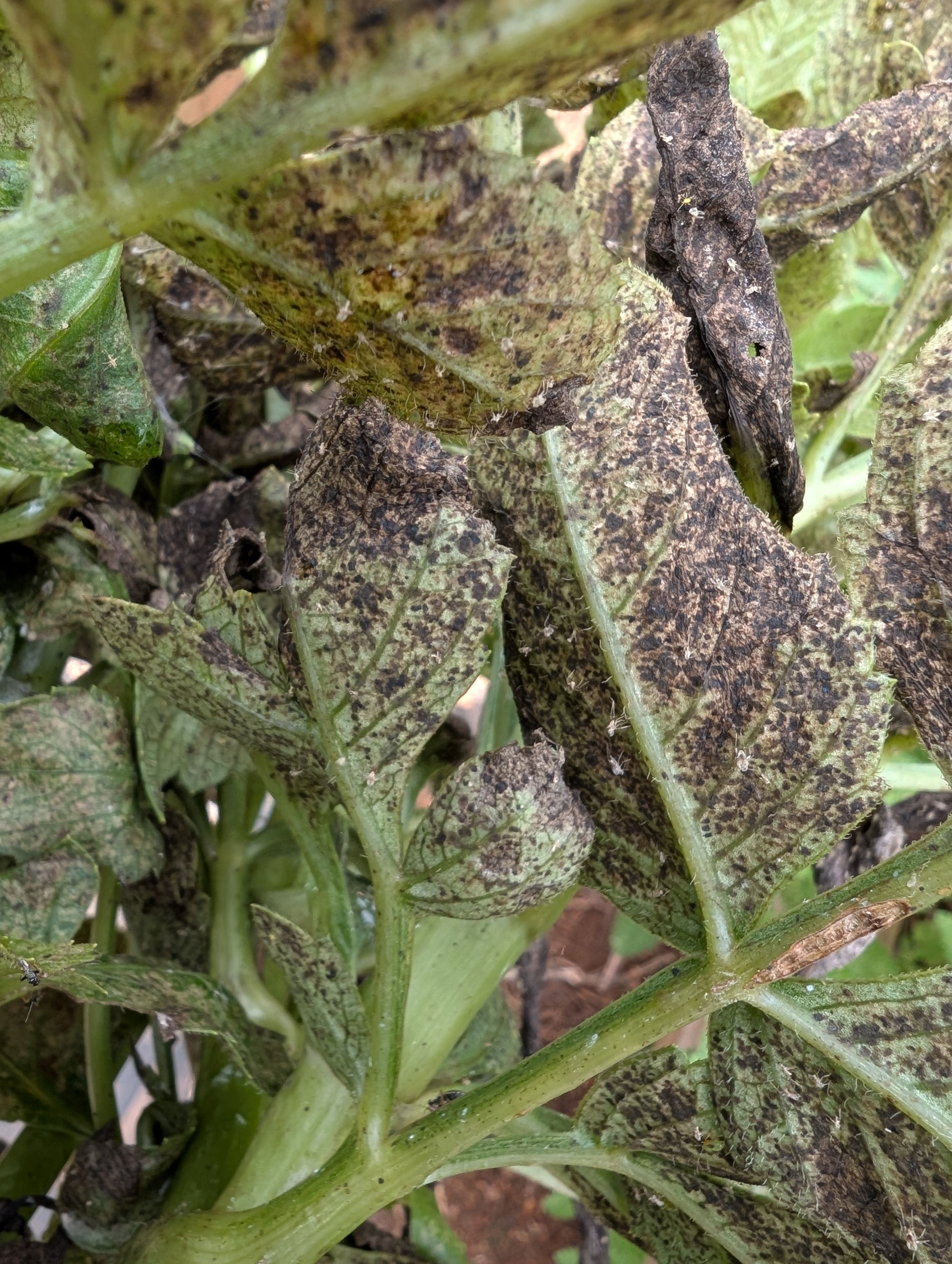
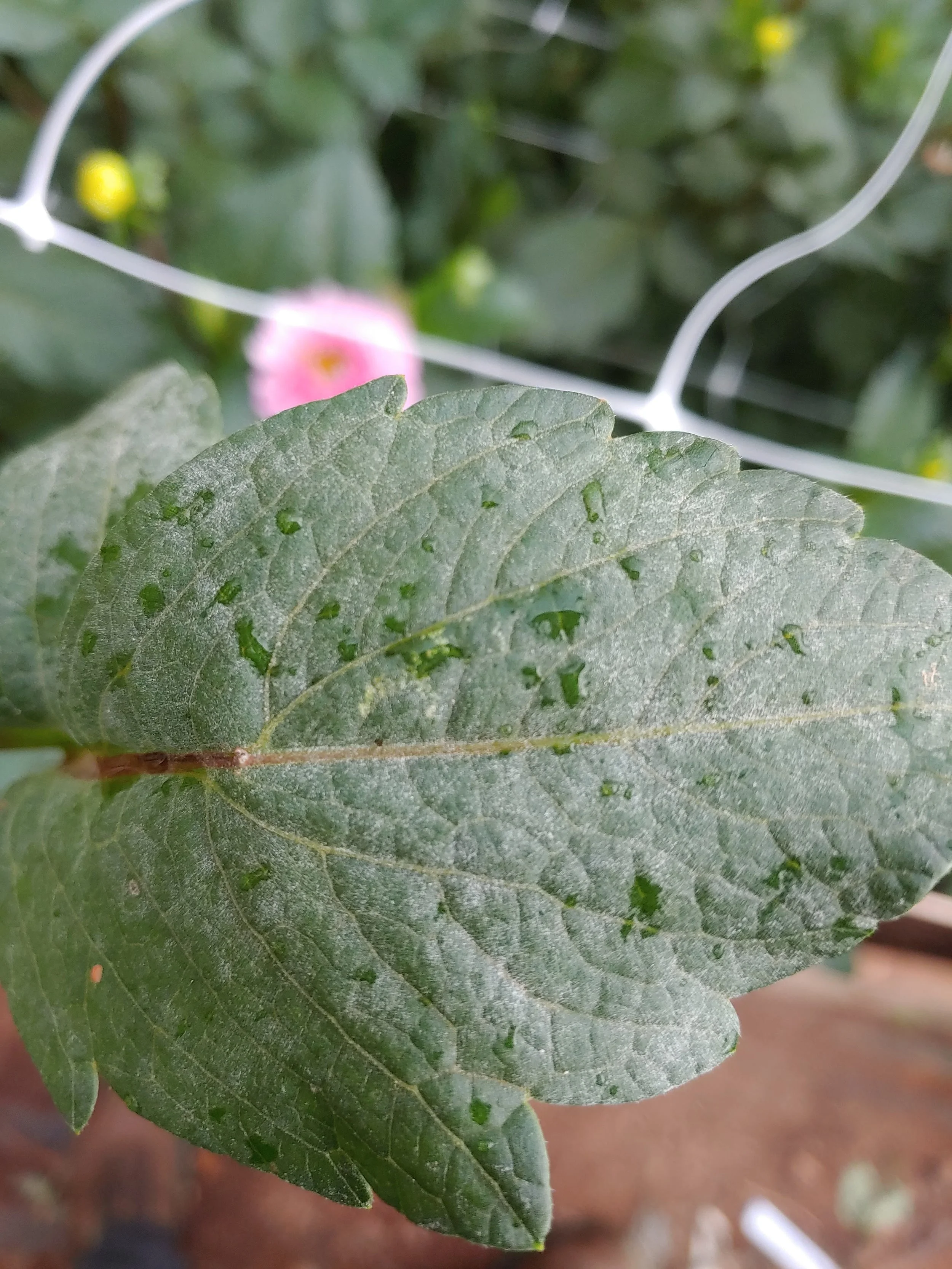
Pics 1&2- Extreme Spider Mite Damage, Pic 3- Powdery Mildew
When to spray (timing):
1. Time of day- early morning or evening. Never in the middle of the day because you risk burning your leaves on your plants.
2. Check your forecast. Some sprays are rain fast very quickly because you don’t want to wash off what you just sprayed.
3. When does your plant need the spray? Maintenance sprays can be done weekly. But sometimes you miss something and you need to spray as an intervention. Then you’ll spray more often. But the exact intervals will depend on what you are spraying. Every label will tell you how often you can spray the product to fix an outbreak.
4. Observation is also a key in timing. Observe your plants and see what really needs to be sprayed. I do believe in preventative spraying because after so many years of growing in the same spot, I know when certain pests are going to hit. But also pay attention to the growth of your plants. For example, we often get rainy periods in my area. (It’s either dry forever or wet forever- no average of both around here). When I see we are going into a rainy period, I will spray before it begins but then usually don’t need to spray until it finishes. Theses periods often last 2-3 weeks. So this is a significant time saving method. I’ve just found that when we have a lot of rain, the pest pressure is so much lower. I do watch for fungal onset very carefully. But usually our pesticide load is significantly reduced during these rainy periods.
How to spray:
We use a backpack sprayer (my4sons brand). A handheld works well too. Even a spray bottle if you only have a few plants. Make sure you are spraying on top of the leaves and under them as well. Sprayers with a misting nozzle are great- that finer mist gets in among your plants better! Also read on the label about the REI (Return Entry Interval). This tells you how long to until you can re-enter your field or garden.
Often you can mix products in your sprayer so you don’t have to spray all individually. You can find this out by reading the label or even a quick web search.
Spraying is probably my least favorite part of growing dahlias so I’m always trying to find ways to limit the time we spend doing it. But I have noticed that since we got on a regular spray regimen many years ago, my dahlias are so much healthier and I have higher quality blooms.