



Designing a Garden to Benefit Your Mental Health- Part 3- Renewal
“Gardening is about setting life in motion, and seeds, like dead fragments, help us recreate the world anew.”
- Sue Stuart-Smith, The Well Gardened Mind: The Restorative Power of Nature
What is it about that tiny little envelope with little black specs in it? Seeds! The hope and joy of new life. Dreams of beauty to come. We’ve all been lured in by a beautiful seed packet or maybe a few packets. Planning my garden each year is one of my favorite parts. So much possibility, nothing has gone wrong yet.
We start the seed, nestling it into the dirt inside a little pot, water it, give it a bit of heat and light. Off it goes! With the right conditions, it springs up within a few days and the dream has begun to be reality.
So many things in life begin this way- we plan, we research. We begin to execute and it’s all going swimmingly until it doesn’t. Until something throws a wrench in the works.
The root hits a rock. We forget to water. The plant gets scorched. We begin to struggle, we feel drained- like a thirsty seedling.
We may or may not make it through to accomplish our goal. The little seedling may get what it needs or it may whither and die. But then one day, we come across the packet of seeds and decide to give them one more chance.
It always comes full circle. Our lives like nature constantly renew themselves. When one plant ventures into the compost pile, it breaks down into life giving substances that feed the flower that springs from it.
Gardens are a constant example of renewal. Renewal is an important principle to be mindful of in our lives. We have a tendency to think life is one continuous improvement when there is a seasonal nature to our lives just like the natural world.
A lot of this disconnect comes from forgetting that we are part of the natural world. We exist in a system that is taking what’s served it’s purpose, breaking it down and producing new resources. We forget about the seasonal nature of our world.
Just as our gardens go through winter, so do our lives. We all know this but we so often get bogged down in the “winter” and forget that spring always comes. Things never stay the same. I’ve resolved to look at the winters of my life as times of deep discovery and learning.
Is it always enjoyable? Gosh, NO!
But in these winters, I’m discovering my deep roots. Those roots produce lush strong summer growth and beauty.
This week, it’s not about adding certain plants to your garden or creating a space. It’s about noticing what’s around you. Creating the awareness of how the world around itself is constantly renewing.
About noticing our lives do the same. We go through winter because spring brings beauty we couldn’t dream of without the deep roots that winter creates.
Did you miss part 2? Find it here
Designing a Garden to Benefit your Mental Health- Part 2- Stress Release
“A garden gives you a protected physical space, which helps increase your sense of mental space, and it gives you quiet, so you can hear your own thoughts. The more you immerse yourself in working with your hands, the more free you are internally to sort things out and work them through.”
—Sue Stuart-Smith, The Well Gardened Mind: The Restorative Power of Nature
The quote above is from one of my favorite books. If you really want to delve into the garden benefits to your mental health, I highly recommend it. This book gave evidence in tangible form to all the things I’ve thought and felt while gardening and it’s effects on my mental health.
When it comes to gardens and stress release, I see the garden as playing 2 roles: distraction and/or a judgement free zone.
Sometimes our brains need distraction. We’ve all had that moment of “eureka” when the answer to a problem comes out of the blue. This is the role of distraction— our brains still work “in the background” but often we have to stop grinding on an issue to allow the answer to come naturally. I used to think that distraction was ignoring a problem or procrastinating about it, but I’ve realized that a moderate amount of distraction can be very helpful.
Our gardens can provide distraction in many ways. Wildlife is a big one— attracting many forms of wildlife- big and small provide hours of entertainment. (And often many lessons to learn from observing the actions of a tiny ant, bird, caterpillar, etc). When we first began raising chickens years ago, we used to sit and watch them for long periods of time— we called it “Chicken TV”. It was fascinating!
Adding pollinator attracting plants to your garden is the perfect way to ensure you always have a constant supply. The herbs you plant for their scent and textures to relax you can also attract loads of pollinators- thus doing double duty.
For several years, I’ve been working on planting our landscape with early blooming flowers. I’ve learned that a vital part of organic pest control is to attract the helpful bugs in early enough to control the not so helpful bugs. Early blooming plants such as alyssum, early daffodils, crocus, winter honeysuckle, and yes— even dandelions! Don’t mow those down!
It’s easy to have loads blooming from May through October but in a warm climate like my zone 7b, I see bees out early and also lots of aphids. So I’ve been amping up those early blooms. This ensures a constant supply of wildlife.
A resting place in your garden from which to observe them is important too- We talked about this in part 1.
Adding water to your garden can bring in lots of entertainment. Ponds are great attractors to wildlife. We have a frog pond. It was dug to be a water catchment but the bullfrogs love it and every time I hear them croak and scuttle into the water as I walk by- well it just makes me laugh!
But sometimes, you need to participate in the garden in a more active role. This is where the garden becomes a judgement free zone. Plants don’t talk back but they will definitely appreciate you releasing your stress with a bit of digging around in the dirt.
I’ve often turned to a project in my field or garden when I needed to work off a bit of frustrating energy. I can look at certain areas and remember what was going on in my life at the time. I also see how those plants survived and so did I. Not only does the present day work release physical stress but there is a lesson to be learned in the future here too!
The simple act of putting a garden space back into order when the rest of life is chaos can be calming to our brain- makes us feel like we have some amount of control.
The Pros and Cons of Early Dahlias
Last week I was sitting around with some farmer friends and we started talking about dahlias— cause it’s almost that time ya know? A few growers mentioned how they had left their tubers in the ground to overwinter and thus began a discussion on the pros and cons of early dahlia blooms. It was some good stuff so I thought I’d share what we talked about!

First off— who doesn’t want to see their dahlias earlier rather than later? So point #1 in the pro category. In order to get earlier blooming dahlias, you need to either overwinter (if that works for your zone), plant very early, or pre-sprout and pot up indoors. Any of these methods would bring dahlias on early. In my zone 7b climate, early dahlias are usually blooming mid- June. If you plant after our last frost date, then usually mid July for first bloom. If you are warmer or colder, adjust accordingly. A lot of this info is a bit more specific to warm hot climates but from what I know- if you are colder, then early blooms wouldn’t be much of a thing without a temp controlled greenhouse.
I really think it’s a matter of expectations if you are going for early blooms. I know some people do it intentionally but I suspect most folks just don’t want to have to dig them up in the fall (and I don’t blame you!).
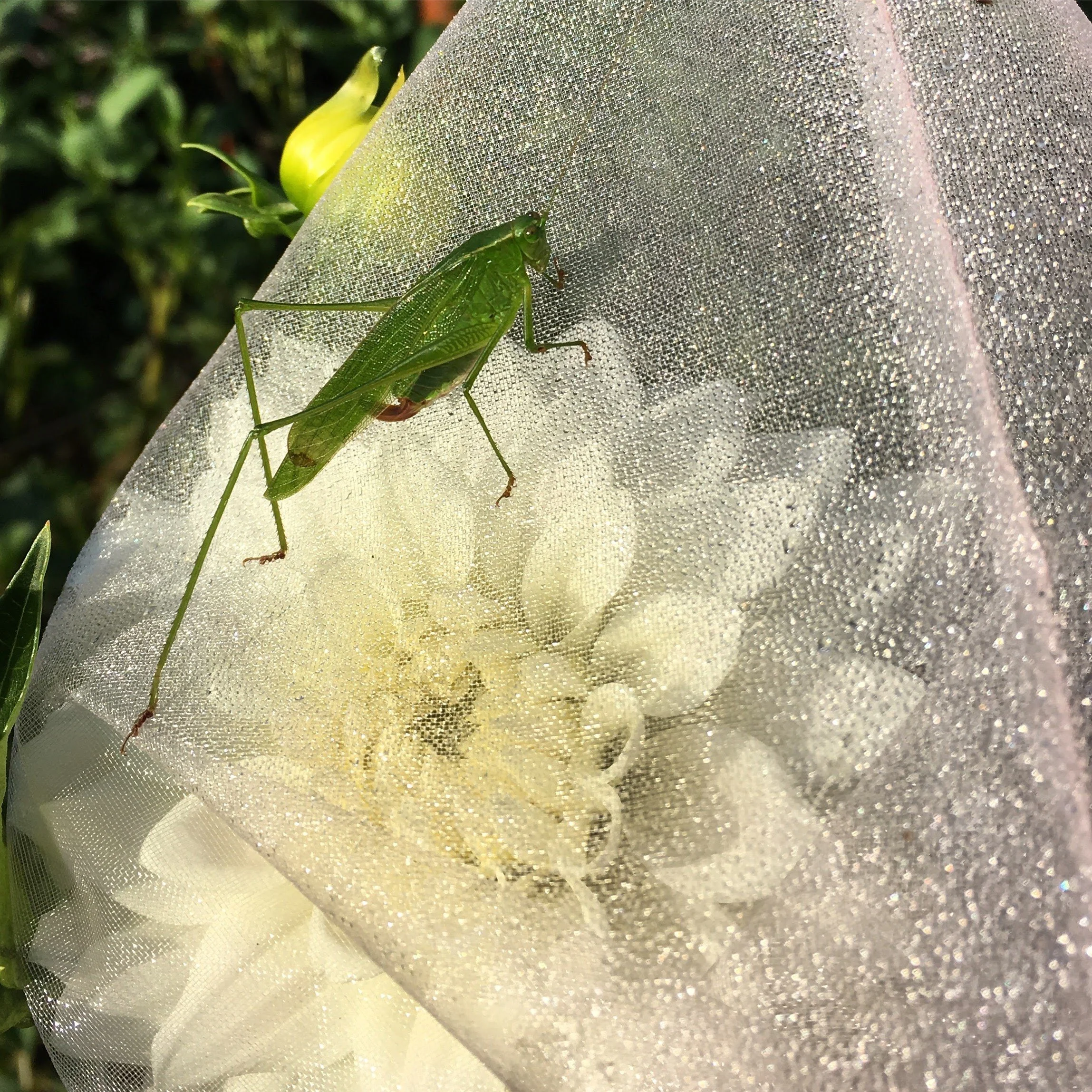
So in the con category- early blooms are way more susceptible to pest problems. June brings thrips and Japanese beetles in my area. Might as well go ahead and add in the grasshoppers that will be in by late June and well you can forget about getting a perfect bloom without an organza bag!
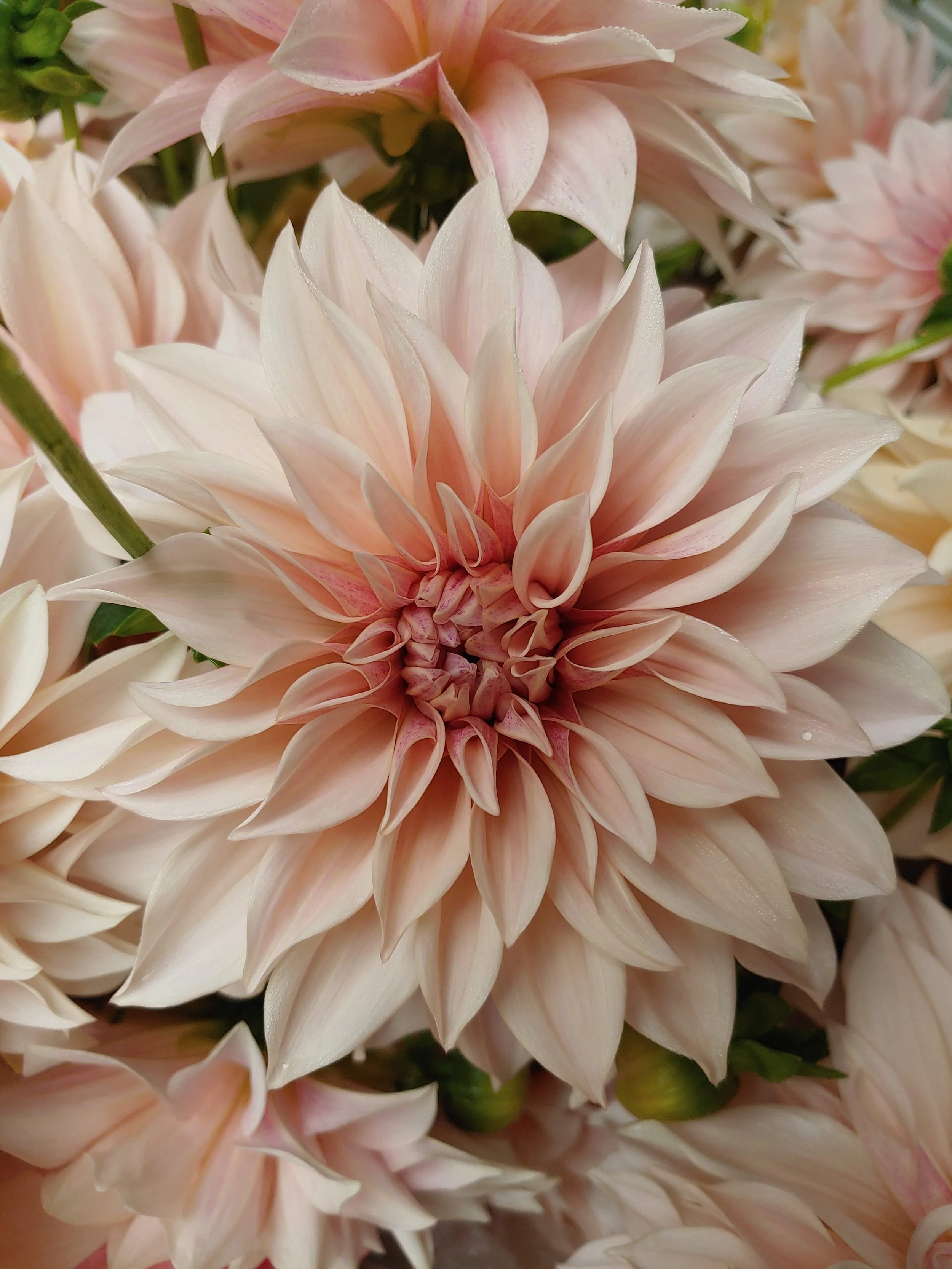
Also in the con category- vase life! Dahlias that bloom in hot weather have an average vase life of 3-5 days and big dinnerplate types- You might as well enjoy them on the plant. Years ago I had a beautiful flush of cafes in mid- July. I thought it was going to be awesome until I started testing vase life and I was getting 3 days! That’s really not even usable for an event. So now I program my cafes to come on much later when the weather is cooler.
So where does that put us if you left your tubers in the ground overwinter? You have a few options.
1. You can accept the pest pressure and realize the first blooms are not going to be perfect unless you bag them or spray them but honestly a lot of sprays won’t get the thrips.
2. If you sell your blooms, advise your customers of the shortened vase life. I think this is pretty important because you don’t want to turn people off of using dahlias in arrangements. I make sure to let my customers know the vase life gets better in the fall and that summer dahlias should be used for events only!
3. You can cut your plants back. This is a good option if you want to minimize the work of dahlias and overwinter them. In mid june or when you start seeing buds, cut the plants back by half. You can also use this technique to time out blooms too. On average it will take the plants 6-8 weeks to rebloom if you cut back hard. The exact time depends on the variety.
All in all I don’t think having early blooms is a bad thing but I think it’s worth having the knowledge and correct expectations of how dahlias perform differently in hot weather.
So are you ready for Dahlia Season? If you need a bit of help getting started, join us for our On Farm Workshop- Dahlia Dividing and Planting- April 23. All the info here!
Not local? Check out our virtual Workshop: Dahlia Growing in the South
Designing a Garden to Benefit Your Mental Health- Part 1- Relaxation
Relaxation is a key aspect for a healthy mental state. Our brains don’t function well when they are in a constant state of stress or trauma. Brains need rest as much as they need stimulation. A garden can provide a place of rest.
In your garden, designate a place that is specifically for rest. A space for times of calm- no kickball or acrobatics allowed. It’s a space where your brain can know nothing is going to harm it, you can let down your guard.
For this space, choose an aesthetic that is pleasing to your personality. Some people would like the look of a prairie meadow- wild and free. Others would prefer a clean tailored look with manicured edges. Whatever style soothes you and feels peaceful. You don’t want to be distracted by the overall aesthetic.
Also make sure there is a comfortable spot to sit or recline. The body should be able to physically rest if so included.
When our brains crave rest/relaxation, it’s often satisfied by stimulating our five senses: smell, sound, taste, touch, sight. Providing a way for the brain to interact with these can calm and sooth.
Sight: The overall aesthetic definitely plays into the sight sense. The visual is the first thing you will notice. But give yourself a special treat- maybe a specimen plant that looks especially appealing during a certain time of year or time of day. If you find yourself coming to your relaxation spot in late afternoon, how about some flowers that open late in the day to early evening. Moonflower vines only open their flowers in the evening.
Also consider natural light in your garden. How the light interacts with different plants at different times of day. If evening is your garden time, then additional lights may be needed.
Touch: Have plants close at hand with interesting textures. Last fall, a customer told me about how she was buying lamb’s ear for a children’s garden because of it’s soft fuzzy texture. Feathery ferny textures like artemisias, fennels, or ferns have soft tactile feels to them.
Smell: I like to combine touch and smell. I keep herbs close by because they have pleasing texture and the smells are calming. A lavender plant would be very pleasant in a relaxation spot. I love to rub my fingers through a thyme plant. There’s something very grounding about that smell to me.
Taste: Personally I like snacks in my garden. I often grow extra cherry tomatoes or English peas because I know I’m going to eat half of them in the garden. Berry fruits such as strawberries make excellent additions. They fit in small spaces! Or if growing the snacks doesn’t work, design a special spot to hold your favorite snack or mini charcuterie board.
Sound: Wind and water are probably the easiest ways to create pleasing sounds in a garden. Fountains, wind chimes or even wind rustling through grass. But don’t forget about the absence of added sound. Sometimes just natural noises are enough- birdsong, critters crawling, etc.
Try adding an experience involving one of the five senses to your garden.
**PS: I’m talking about gardens in this series but the concepts discussed here can be found in nature— your local park, a hike in the woods, even a small back patio. You don’t have to have a full garden to integrate the principles into your life.
Designing a Garden to Benefit your Mental Health- An Introduction
I’ve noticed a common thread over the past 2 years in the stories you tell me. Time and time again you’ve told me how flowers have brought hope, comfort, joy in hard times. You’ve shared how flowers have joined in your celebrations and how they’ve comforted in times of loss.
Intrinsically I’ve known these things for a long time, but I guess I’ve never connected so much with people over flowers as I have the past 2 years. When you spend as much time outside as I do, you very acutely feel it when you are forced indoors for too long. This acute change is the way I imagine you feel when you first notice the power of flowers.
Flowers have been a life long love and out of that came gardening. I began gardening later in life, about 20 years ago. It began as a hobby- the sheer joy and amazement of seeing a tiny seed turn into a plant!
However over the last 2 years, I’ve realized my garden is my sanity. I love the reward of a good harvest. But the journey from seed to harvest has become the more fascinating part.
I’m very goal oriented and for years I was always working hard to accomplish the goal and then move on to the next thing. But I’ve begun to see how much I miss when I overlook the journey; I fail to stop along the way and notice the small milestones. I recently heard farming described as “the work of a lifetime”. Gardens are this way too, they are never truly finished.
I’m endeavoring to see my garden as an evolving world with a life of it’s own. (Because let’s face it— it has a life of it’s own— millions of tiny organisms living within our gardens!)
Through observing the process I’ve begun to see how beneficial the garden is to my mental health. It’s become more than just an escape.
Over the next few weeks, I’d like to share some tips and introduce some ideas to explore so that you can create (or add to) a garden to benefit your mental health.
This series has been brewing in my mind for a long time but I wasn’t quite sure how to approach it. So I decided to think about what our brains need for a healthy mental state. There are a lot of aspects but I’ve chosen a few to discuss in this series. Hope on over to part 1 to begin.